

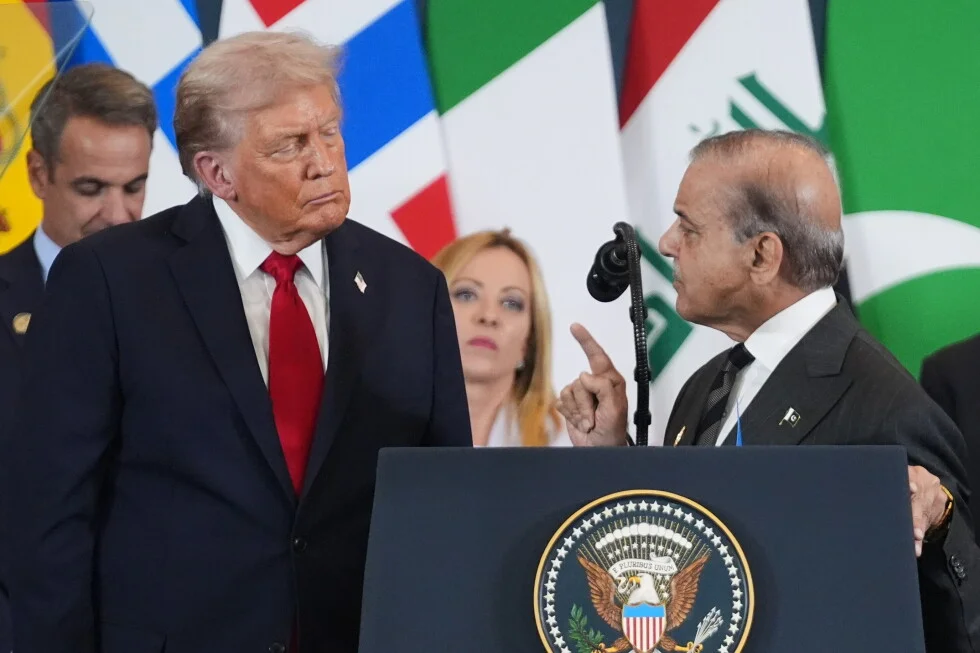
Middle East Diplomacy Takes a New Turn: Pakistan Facilitates U.S.-Iran Contacts as Trump Issues Stern Warning to Netanyahu
WASHINGTON / TEHRAN: A significant new development has emerged in Middle Eastern geopolitics, where behind-the-scenes diplomacy is advancing alongside growing military posturing. According to reports, key proposals between the United States and Iran are being exchanged through Pakistani diplomatic channels. At the same time, newly elected U.S. President Donald Trump has reportedly delivered a strong warning to Israeli Prime Minister Benjamin Netanyahu, stating that Israel could be left to face the consequences alone if it initiates another war against Iran.
Pakistan’s Diplomatic Role in U.S.-Iran Communications
Iran’s Ambassador to the United Nations, Amir Saeid Iravani, has confirmed that an alternative diplomatic channel involving Pakistan is being used to facilitate communications aimed at reaching a potential agreement between Tehran and Washington.
Speaking to the media following a recent session of the United Nations Security Council, Iravani stated:
“Both countries are currently exchanging different positions and proposals, but no final text has yet been agreed upon.”
The remarks indicate that negotiations remain ongoing, although significant differences reportedly still exist between the two sides.
Washington’s Warning to Israel
A major policy signal has also emerged from Washington. Reports suggest that U.S. President Donald Trump has warned Israeli Prime Minister Benjamin Netanyahu that any renewed military confrontation with Iran could leave Israel without American backing.
Speaking to the media in Washington, Trump reportedly emphasized that Netanyahu must exercise extreme caution, warning that further escalation could isolate Israel in the region.
U.S. Vice President Signals Strategic Differences
U.S. Vice President J. D. Vance reinforced the message by suggesting that American and Israeli interests may not always align on every strategic issue.
According to his remarks:
- The United States and Israel may have differing interests on certain critical strategic matters.
- Washington’s primary objective remains preventing Iran from acquiring nuclear weapons.
- The United States intends to pursue that objective regardless of whether Israel fully agrees with its broader strategy.
Iran Claims Expanded Regional Security Network
On the military front, Iran has adopted a more assertive posture. General Esmail Qaani, commander of the Quds Force, claimed that Tehran has established a new security belt stretching from the Strait of Hormuz to the Bab el-Mandeb.
He further warned that Iran’s regional allies are positioned along some of the world’s most important maritime routes and asserted that any future U.S. or Israeli military action would trigger a response stronger than previous confrontations.
The developments highlight a rapidly evolving regional landscape in which diplomacy, strategic competition, and military deterrence are unfolding simultaneously, with Pakistan reportedly playing a notable role in facilitating communication between Washington and Tehran.