

High-Level Makran Delegation Meets IG FC South in Turbat to Discuss Security and Border Trade
High-Level Makran Delegation Meets IG FC South in Turbat to Discuss Security and Border Trade
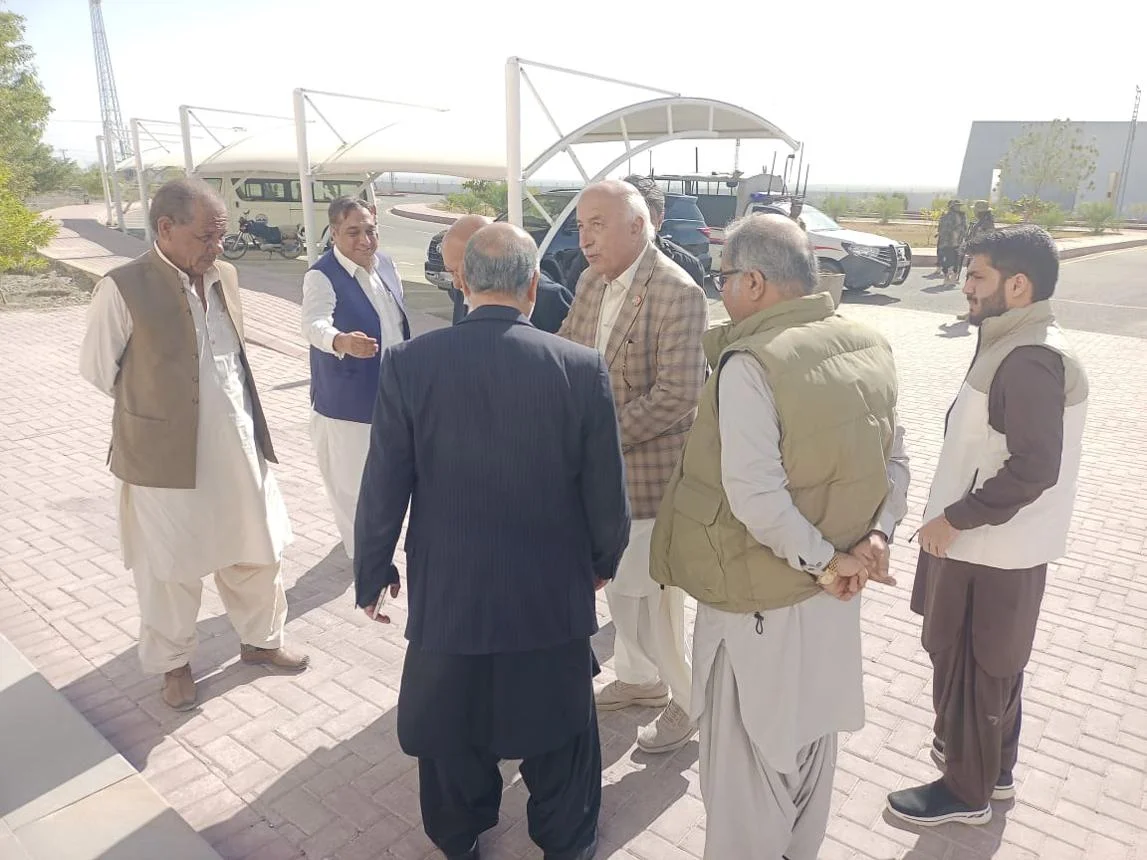
A prominent delegation comprising political leaders, tribal elders, civil administrators, and professionals from across the Makran Division visited the Headquarters of Frontier Corps (FC) Balochistan (South) today to meet with the Inspector General (IG) FC and extend early Eid-ul-Adha greetings.
The multi-sectoral delegation included representatives from Turbat, Mand, Panjgur, Dasht, Buleda, and Gwadar, showcasing strong civil-military alignment in Southern Balochistan.
Key Political Stakeholders Shape Regional Dialogue
The meeting saw high-profile political participation, including former Chief Minister of Balochistan and current MPA Dr. Abdul Malik Baloch, former Member of National Assembly Justice (Retd) Shakeel Ahmed, former Balochistan Health Minister Syed Ehsan Shah, and former MPA Lala Rashid.
The inclusion of these senior policymakers underscored the strategic weight of the security-and-development dialogue between the state institutions and the local leadership.
Border Trade and Development Initiatives Take Center Stage
During the detailed briefing and subsequent discussion, the forum reviewed the overall law and order situation in Southern Balochistan, along with specific economic progress indicators under the Balochistan Special Development Initiative (BSDI) and community-led projects managed by the Parwaz Foundation.
A major portion of the dialogue focused on refining border trade mechanisms, which form the economic backbone of the local populace in the Makran Division.
Joint Commitment to Regional Stability
The participants unanimously reaffirmed that establishing durable peace and eliminating terrorism remains a shared responsibility of both the state and civil society. The delegation emphasized that sustainable socio-economic development and prosperity in Balochistan are intrinsically linked to a secure environment.
The large turnout at the FC South Headquarters is being viewed by political analysts as a clear indicator of growing mutual trust, harmony, and public confidence in state institutions.