

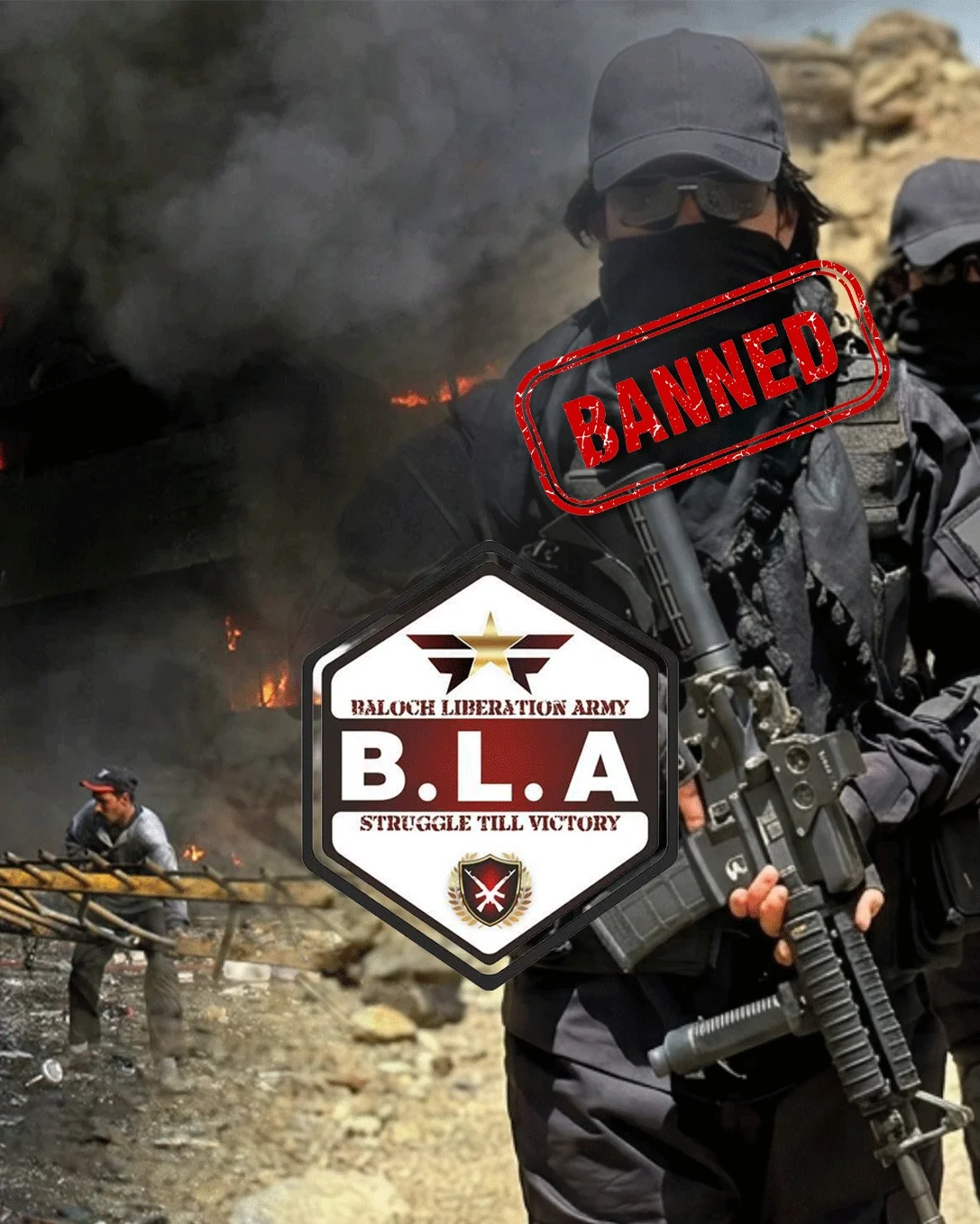
Global Supporters of the BLA and Majeed Brigade Emerge Openly
Does the blood of innocent civilians and the charred remains of terrorism victims carry any weight on the scales of international politics? Do the funeral processions and scenes of violence emerging from Balochistan fail to register with the world’s major powers?
According to this analysis, despite Pakistan and China presenting what they describe as substantial evidence against the Baloch Liberation Army (BLA) and its suicide unit, the Majeed Brigade, efforts to secure international sanctions have encountered resistance at the diplomatic level.
Diplomatic Pressure and Allegations of Double Standards
Pakistan and China reportedly submitted a joint proposal to the United Nations Security Council's 1267 Sanctions Committee, seeking the designation of the BLA and Majeed Brigade as globally sanctioned terrorist organizations. Such a designation could potentially lead to asset freezes, travel restrictions, and other international measures against individuals and entities linked to these groups.
However, the proposal was reportedly delayed after the United States, France, and the United Kingdom placed what is known as a "technical hold" on the request, seeking additional information and evidence before proceeding.
Critics of the decision argue that the move reflects a double standard in international counterterrorism efforts, particularly when attacks in Balochistan target civilians, security personnel, and strategic development projects such as the China-Pakistan Economic Corridor (CPEC) and the port of Gwadar Port.
Victims of Violence and International Response
Supporters of the sanctions proposal argue that international hesitation overlooks the human cost of violence in Balochistan. They point to attacks that have resulted in civilian casualties, including Pakistani and Chinese nationals, and contend that the suffering of victims and their families should receive greater international attention.
The criticism centers on the belief that geopolitical considerations sometimes overshadow the humanitarian consequences of militant violence.
Contrasting Positions on the BLA
The debate is further complicated by differing international approaches toward the group. Pakistan maintains that the BLA and affiliated organizations are responsible for acts of terrorism and should face comprehensive international sanctions.
Meanwhile, the BLA portrays its activities as part of a political and nationalist struggle and rejects accusations made against it. The organization has often framed international developments through the lens of its own political narrative.
This divergence has contributed to ongoing disputes over how the group should be treated within international institutions.
The Broader Question
The controversy raises a broader question frequently debated in international affairs: Should acts of violence against civilians ever be justified by political, historical, or ideological grievances?
For Pakistan and China, the reported delay in securing broader international sanctions represents a diplomatic setback. Both countries are expected to continue presenting evidence and advocating their position before international forums.
At the same time, the situation highlights the wider challenge of achieving global consensus on counterterrorism measures in a world where security concerns, political interests, and competing narratives often intersect.