

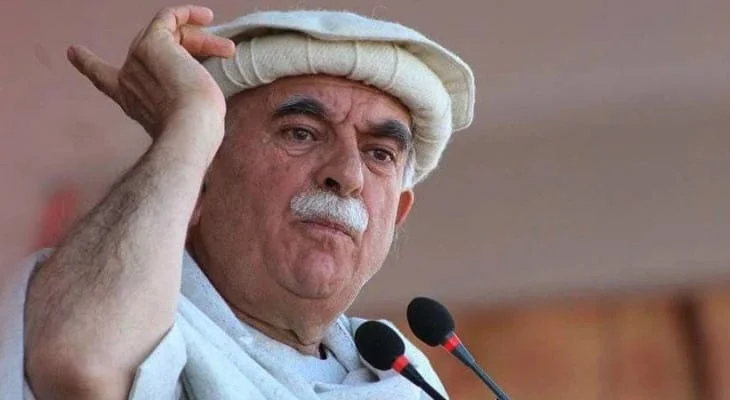
National Assembly Budget Debate: Mahmood Khan Achakzai Delivers Hard-Hitting Speech Against Government Policies
Islamabad: Leader of the Opposition and chief of the Pakhtunkhwa Milli Awami Party, Mahmood Khan Achakzai, launched a strong criticism of the government’s economic policies during the National Assembly budget session. Opening the budget debate, he raised concerns over fiscal management, provincial rights, constitutional violations, and human rights issues, warning that governance through force rather than dialogue is pushing the country towards instability.
He strongly criticized the federal budget figures, especially claims related to income levels, arguing that millions of Pakistanis are surviving on extremely low earnings while a small elite enjoys luxury lifestyles. He highlighted the widening gap between rich and poor and questioned the fairness of economic distribution.
Provincial rights and federal structure
Achakzai accused the federal government of treating smaller provinces like “colonies,” particularly Sindh and Balochistan. He argued that provinces are being deprived of their due share and are not receiving adequate resources to meet public needs. He raised concerns over fiscal injustice, stating that provinces contribute revenue but do not receive proportional development funding.
Criticism of past military and political actions
The opposition leader referred to historical political events and alleged human rights violations, including the cases of Nawab Nauroz Khan, Nawab Akbar Bugti, and alleged enforced disappearances linked to political unrest. He stated that unresolved historical grievances continue to fuel distrust between the state and marginalized communities.
Remarks on FATA merger
He termed the merger of FATA into Khyber Pakhtunkhwa a “sudden administrative decision” and questioned its planning and implementation. According to him, the merger introduced complex legal and administrative frameworks that have created governance challenges in the region.
Human rights and political repression
Achakzai strongly criticized post–May 9 developments and alleged mistreatment of political workers, including arrests and restrictions on political freedoms. He emphasized that the Constitution guarantees the right to peaceful protest, and that excessive force against demonstrators undermines democratic norms.
Call for dialogue and parliamentary supremacy
Despite his criticism, he stressed that dialogue remains the only viable solution to Pakistan’s political challenges. He called for all institutions to work within constitutional limits and reaffirmed that Parliament should remain the supreme decision-making body.
He also highlighted the importance of economic opportunities for youth, suggesting that investment in education, employment, and tourism could help stabilize the country and reduce social unrest.
In conclusion, Achakzai urged political reconciliation, institutional balance, and meaningful negotiations as the only path forward for national stability.