

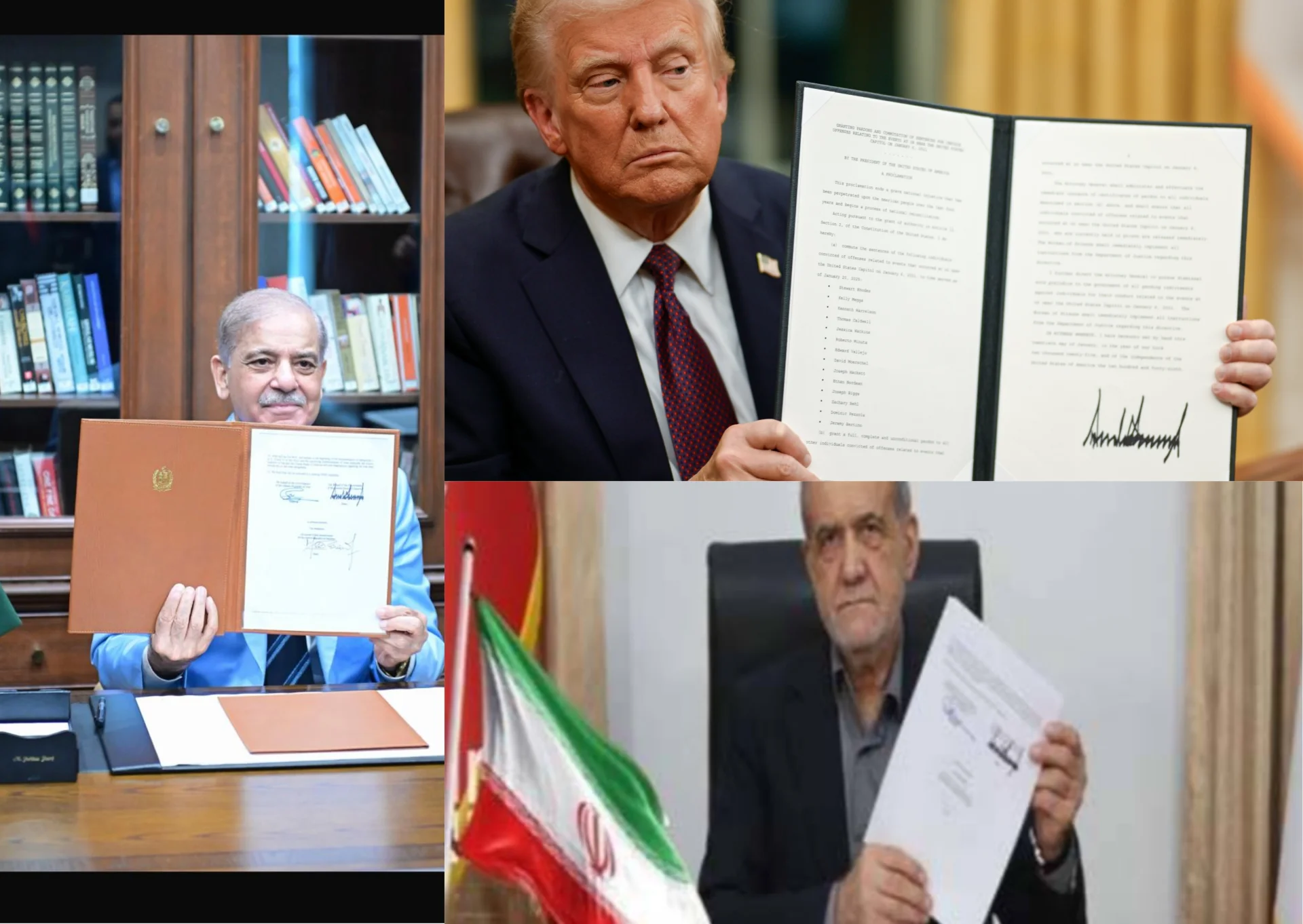
Iran and US Publish Agreement Text as Tehran Clarifies Missile and Nuclear “Red Lines”
Tehran / Washington: Iran’s Foreign Ministry and White House officials have formally confirmed that the historic Memorandum of Understanding (MoU) between the Islamic Republic of Iran and the United States has been signed. According to US officials, President Donald J. Trump has signed the document, with a 60-day implementation period beginning immediately.
In a press briefing held in Tehran following the signing, Iranian Foreign Ministry spokesperson Esmail Baghaei stated that the agreement was reached with mutual consent and that the Persian text fully corresponds with the English version. However, he emphasized that Iran will not compromise on its defense capabilities.
60-Day Framework and Restrictions on US Actions
The Iranian spokesperson outlined key strategic terms agreed for the next 60 days:
- No increase in military presence: The opposing side will not expand its military footprint in the region during this period.
- Freeze on new sanctions: The United States will not impose any new economic sanctions on Iran during the 60-day window.
- Oil exports resumed: Restrictions on Iranian oil exports are expected to be lifted immediately, allowing Iran access to global markets.
- Regional security clause: Any Israeli strike on Lebanon would be treated as a clear violation of the agreement.
Defense and Nuclear Position: “Missiles Are Not for Negotiation”
Esmail Baghaei reiterated Iran’s firm stance on its defense and nuclear program, stating that these issues are non-negotiable under the agreement.
He declared that Iran’s missile capabilities are strictly for defense purposes and not subject to diplomatic discussions.
“Iran’s missiles are meant for use, not for negotiation,” he said, reaffirming Tehran’s position.
On nuclear matters, he added that no enriched uranium would be transferred outside the country, although Iran retains the technical option of processing its stockpile domestically through controlled enrichment reduction.
Strait of Hormuz Fees and Frozen Assets
The spokesperson also highlighted two key economic components of the arrangement:
- Service fees in the Strait of Hormuz: Iran will now charge vessels passing through the strategic waterway for security and maritime services, emphasizing its joint management with Oman.
- Access to frozen funds: The United States is required to remove legal, banking, and diplomatic barriers restricting Iran’s access to its frozen financial assets.
Baghaei added that technical-level talks are being initiated immediately to define the implementation mechanism of the agreement.