

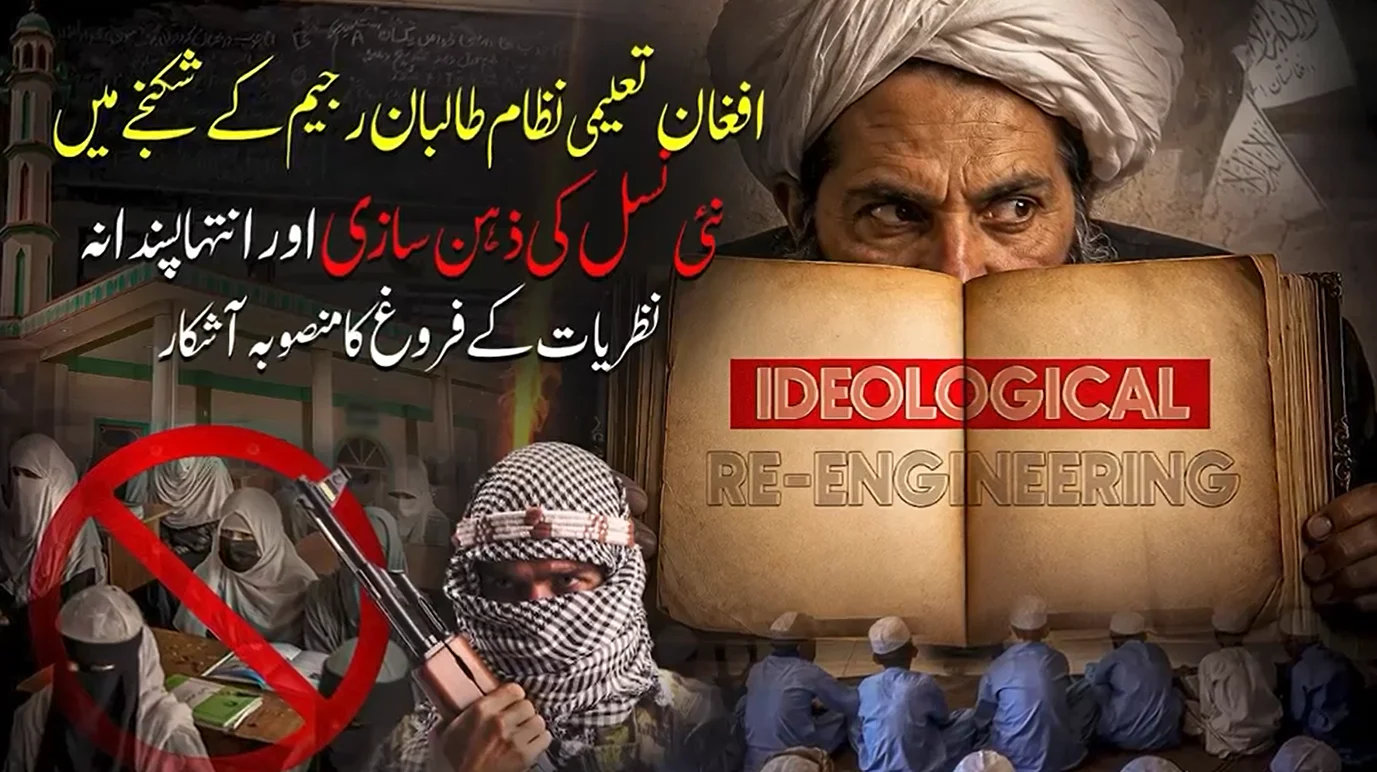
Taliban’s Education System in Afghanistan Hijacked by Extremism: Alarming Plan Revealed
Lowy Institute Report: 3.6 Million Afghan Children Exposed to Militarized and Jihadist Narratives
Kabul / Sydney (Web Desk) — After imposing severe restrictions on girls’ education, the Taliban regime has reportedly moved to reshape Afghanistan’s broader education system around its ideological and militarized worldview. Recent research by the Australian think tank Lowy Institute and the Hamrah Network alleges that ideological messaging, unconditional loyalty and extremist narratives are increasingly replacing modern educational principles within the country’s education system.
Rapid Expansion of Madrassas and Major Curriculum Changes
According to the Hamrah Network, the number of registered madrassas across Afghanistan has increased from around 5,000 to more than 23,000 since the Taliban returned to power, with more than 3.6 million children reportedly enrolled.
Promotion of Militarized Narratives: The Lowy Institute report alleges that militarized and jihadist narratives have been incorporated into educational content, potentially influencing the intellectual development of young students.
Promotion of Suicide Attacks: The reports raise concerns over the portrayal of suicide attackers in educational and ideological messaging, warning that the distinction between religious education and armed militancy is being increasingly blurred.
Restrictions on Independent Thinking: Critics argue that the emerging education model discourages questioning and intellectual curiosity while promoting conformity and unquestioning loyalty to the ruling authorities.
Regional Security Implications and International Concerns
Experts warn that even if Afghan girls are eventually allowed to return to schools, fundamental changes to the education system could continue to have serious long-term consequences for the country’s younger generation.
Key Takeaways
A Potential Breeding Ground for Extremism: The presence of Al-Qaeda and other militant groups, combined with an increasingly ideological education system, has raised concerns about regional and international security.
Cross-Border Security Concerns: Analysts argue that reports of ideological and militarized education in Afghanistan could further reinforce concerns about the potential for extremist networks to operate from Afghan territory.
Long-Term Impact: Critics warn that systematic ideological conditioning of young people could contribute to prolonged instability, intolerance and extremism across the region.
The Bigger Concern: Afghanistan’s education system is not only a question of classrooms and curriculum; the direction in which millions of children are educated could have profound consequences for the country’s future and regional stability.