

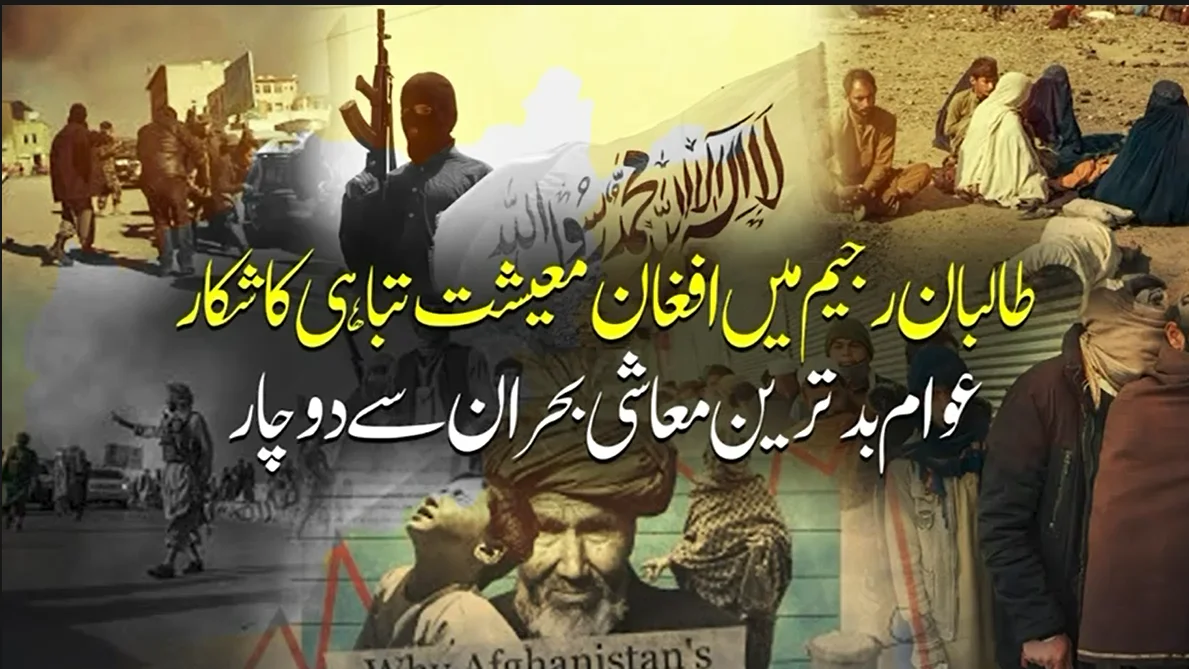
Taliban Regime’s Failed Policies Push Afghan Economy Deeper into Crisis
Kabul — Afghanistan’s economic crisis is worsening with each passing day due to the Taliban regime’s flawed economic policies and unwise strategies. According to a recent report by international media network Radio Free Europe/Radio Liberty, the Taliban regime’s five-year development strategy has largely failed, while its claims of economic progress remain far removed from the realities on the ground.
Rising inflation, widespread unemployment, and a severe shortage of investment have pushed ordinary Afghan citizens into extreme hardship.
Food Becomes Unaffordable as Inflation Rises to 8 Percent
According to the Radio Free Europe report, the prices of basic necessities in Afghan markets have moved beyond the reach of ordinary citizens, contributing to a growing food crisis.
Sharp Increase in Inflation: Annual inflation rose to 8 percent in May, compared with only 0.5 percent during the same month of the previous year.
Rising Food Prices: Food prices in Afghanistan increased by as much as 8.2 percent, making it increasingly difficult for poor families to afford even two meals a day.
Restrictions on Women’s Employment Deepen the Economic Crisis
International economists say the Taliban’s decision to exclude half of the population from economic activity has severely weakened the country’s economic foundations.
“The Afghan regime’s extremist policies and restrictions on women’s employment have removed half of the country’s productive workforce from the economy. Bans on women’s jobs and businesses have pushed Afghan families into severe financial hardship.” — International economic experts
High Unemployment and the Impact of Diplomatic Isolation
Unemployment Crisis: Due to the Taliban administration’s poor governance, unemployment has reportedly reached one of the highest levels in the country’s history, standing at 13.35 percent by the end of 2025.
Diplomatic and Economic Isolation: According to international experts, Afghanistan’s alleged support for destabilising elements has contributed to diplomatic isolation, with the direct consequences being borne by the country’s economy and ordinary citizens.
Lack of Investment: The closure of international banking channels and the near absence of foreign investment have brought economic activity in Afghanistan close to a standstill.