

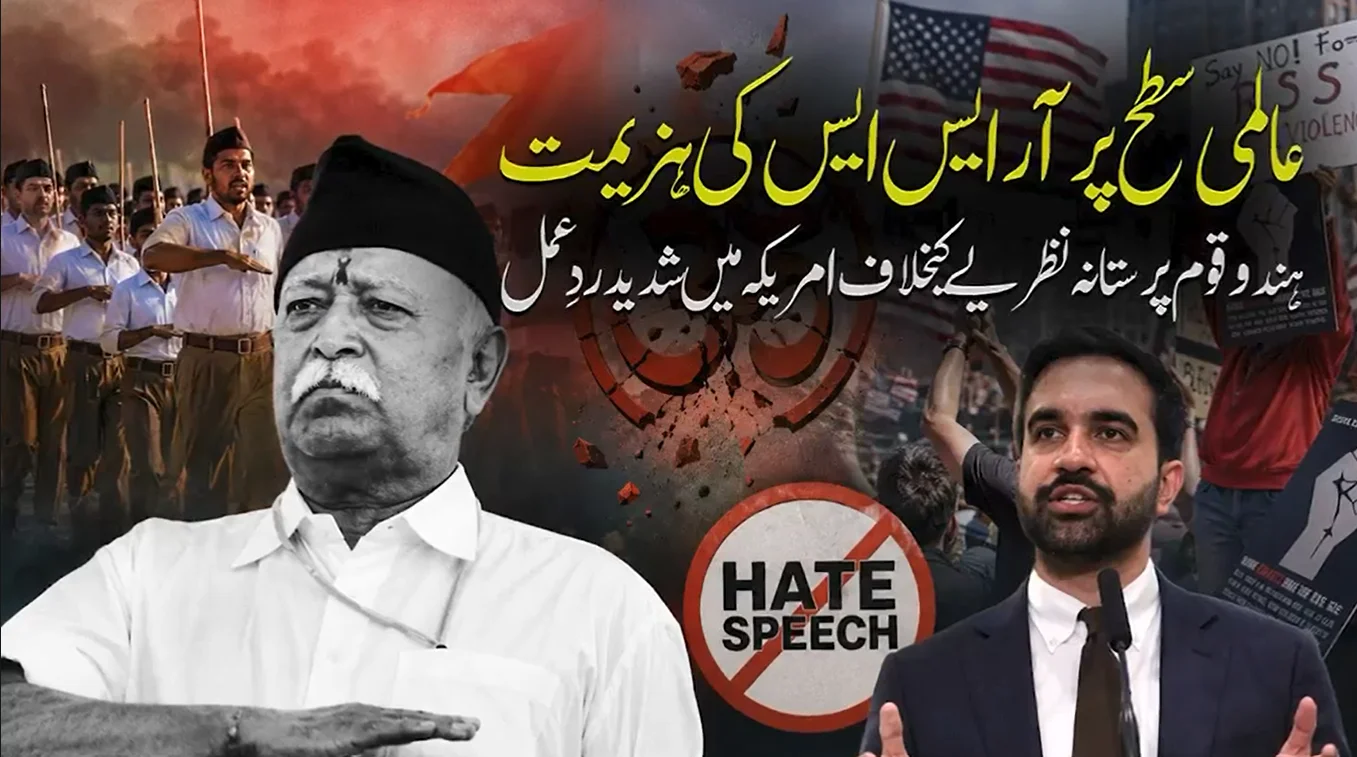
Protests Erupt in the US Against RSS, Hindutva’s Anti-Minority Agenda Comes Under Scrutiny
New York — August 29, 2026: Civil society groups, human rights activists and political figures in the United States have taken to the streets to protest the expected address and activities of the leadership of the Hindu nationalist organization Rashtriya Swayamsevak Sangh (RSS).
According to international media reports, demonstrations in New York and other US cities have drawn renewed attention to the ideology of the RSS and its relationship with India’s ruling Bharatiya Janata Party (BJP), particularly concerning allegations of discrimination against religious minorities.
Public Protests in New York and Political Response
International media reports have highlighted protests in New York and statements from US political figures.
- Zohran Mamdani’s position: According to German broadcaster DW, New York political leader Zohran Mamdani has described the RSS as an extremist and divisive organization.
- Public opposition: A report by Turkish broadcaster TRT said significant public resistance had emerged ahead of the expected visit, with protesters accusing the organization of undermining religious freedoms in India.
- Concerns over minorities: Demonstrators used placards and banners to accuse the RSS of promoting hostility and discrimination against Muslims, Sikhs, Christians and Dalits in India.
RSS Influence on Politics and Education
International analysts and independent Indian media outlets have also examined the organization’s alleged influence over political and educational institutions.
Ideological Link With the BJP
According to TRT’s analysis, the ideological foundations of the Modi government are closely associated with the broader Hindutva movement, which critics accuse of marginalizing religious minorities.
Concerns Over Educational Content
Indian publication The Wire has reported on the RSS’s influence in educational institutions and universities, raising concerns about changes to academic curricula and historical narratives.
International scholar Christophe Jaffrelot has warned that the introduction of politically influenced or distorted historical narratives in universities could shape younger generations’ understanding of India’s history and politics.
The protests in the United States have intensified international debate over the RSS, Hindutva ideology, religious freedom and the treatment of minorities in India.