

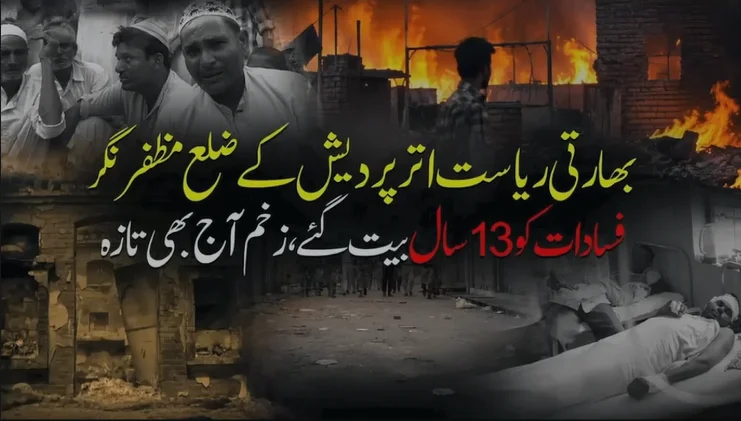
Muzaffarnagar Riots Complete 13 Years: The Bloody Wounds of 2013 and an Unfinished Journey for Justice
Lucknow / New Delhi — Thirteen years have passed since the horrific communal riots that began in India’s Muzaffarnagar district of Uttar Pradesh on August 27, 2013, yet the wounds of the victims remain fresh. A dispute reportedly triggered by a minor motorcycle incident quickly escalated into organized violence, resulting in one of the most devastating human tragedies in recent Indian history.
Allegations of State Complicity and 20 Days of Violence
During the riots, extremist elements carried out widespread violence for around 20 days, which observers described as occurring amid alleged administrative and state failures. Dozens of people lost their lives, women were sexually assaulted, and entire localities were set ablaze.
Displacement of More Than 50,000 People: Fearing violent attacks, more than 50,000 Muslims were forced to leave their homes and seek shelter in relief camps.
Destruction of Property and Mosques: Numerous homes and commercial establishments were selectively targeted and reduced to ashes.
Revelations from Judicial and Investigative Reports
Judicial and administrative investigations conducted after the Muzaffarnagar tragedy highlighted serious political and administrative failures.
Supreme Court Observations: India’s Supreme Court held the central and state governments of the time accountable for serious security and administrative failures.
Justice Vishnu Sahai Commission: The judicial commission’s report highlighted the roles of local political actors and administrative lapses, including concerns involving the Bharatiya Janata Party (BJP) and the then-ruling Samajwadi Party.
Incitement Through Fake Videos: According to an investigation by India Today, BJP leader Sangeet Som was accused of sharing a misleading video on social media that contributed to inflaming communal tensions.
Conviction of Political Leaders: In 2022, BJP leader Vikram Singh was sentenced to two years in prison in a case related to the riots.
A Lasting Question Mark Over Secularism
The Muzaffarnagar riots remain a serious question mark over India’s secular identity and its claims regarding the protection of minorities. Even after thirteen years, many victims continue to await full rehabilitation and what they consider to be complete and lasting justice.