

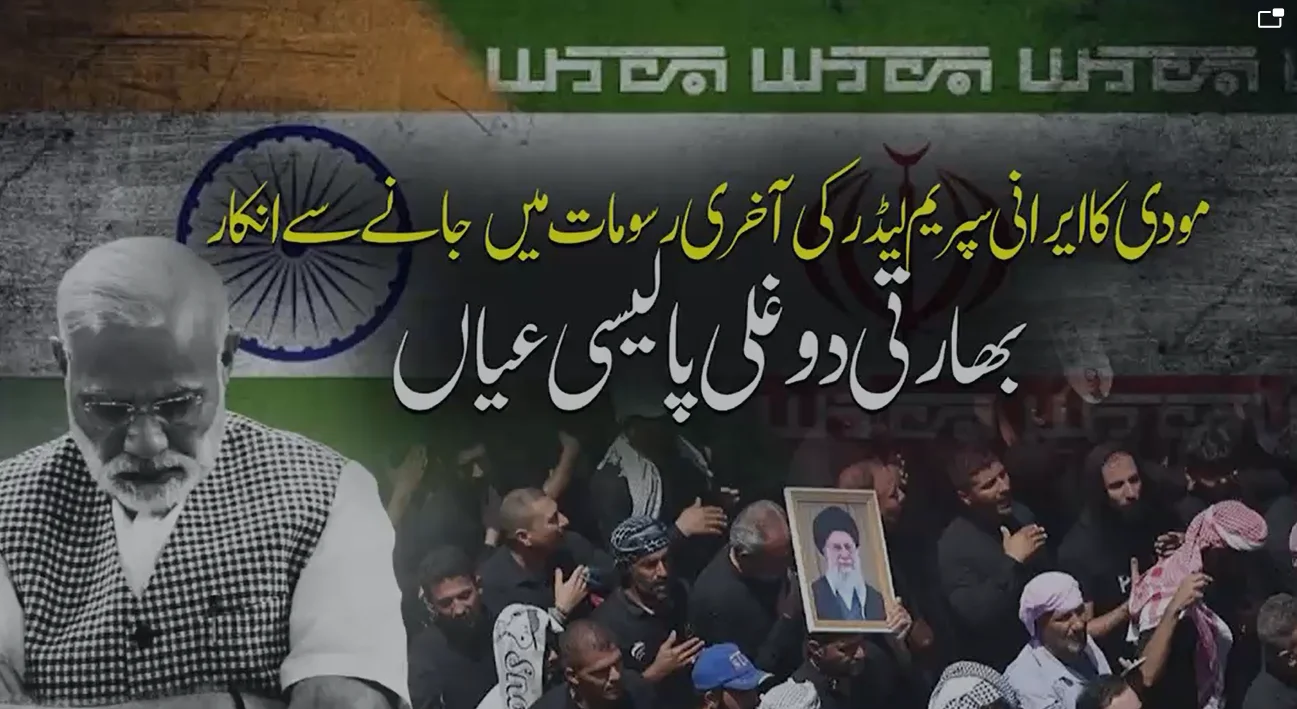
Modi's Absence from Iranian Supreme Leader's Funeral Draws Attention to India's Foreign Policy
New Delhi — Indian Prime Minister Narendra Modi's decision not to attend the funeral of Iran's Supreme Leader Ayatollah Ali Khamenei has drawn criticism from political commentators and analysts, with some questioning what it signals about India's foreign policy priorities and its relations with Iran and Israel.
According to The Times of India, the Indian government sent a junior-level delegation to represent the country at the funeral. The delegation included the Governor of Bihar and a Minister of State for External Affairs.
Domestic Criticism and Public Debate
Modi's absence has also sparked debate within India, where political and strategic analysts have offered differing views on the decision.
- Historical Comparison: Defence analyst J. D. Bakshi argued that when former Indian Prime Minister Indira Gandhi passed away, Iran's Supreme Leader attended her funeral, suggesting India should have reciprocated with high-level representation.
- Geopolitical Considerations: Political analyst Parveen Shani suggested that New Delhi's approach may have been influenced by its broader strategic relationships, including those with the United States and Israel.
Comparison of Official Delegations
Foreign policy observers noted the contrast between the two countries' official representations. While India was represented by a junior-level delegation, Pakistan sent a higher-level delegation, including senior civilian and military officials.
Analysts say the difference in representation has prompted discussion about the current diplomatic priorities of both countries and their respective relationships with Tehran.