

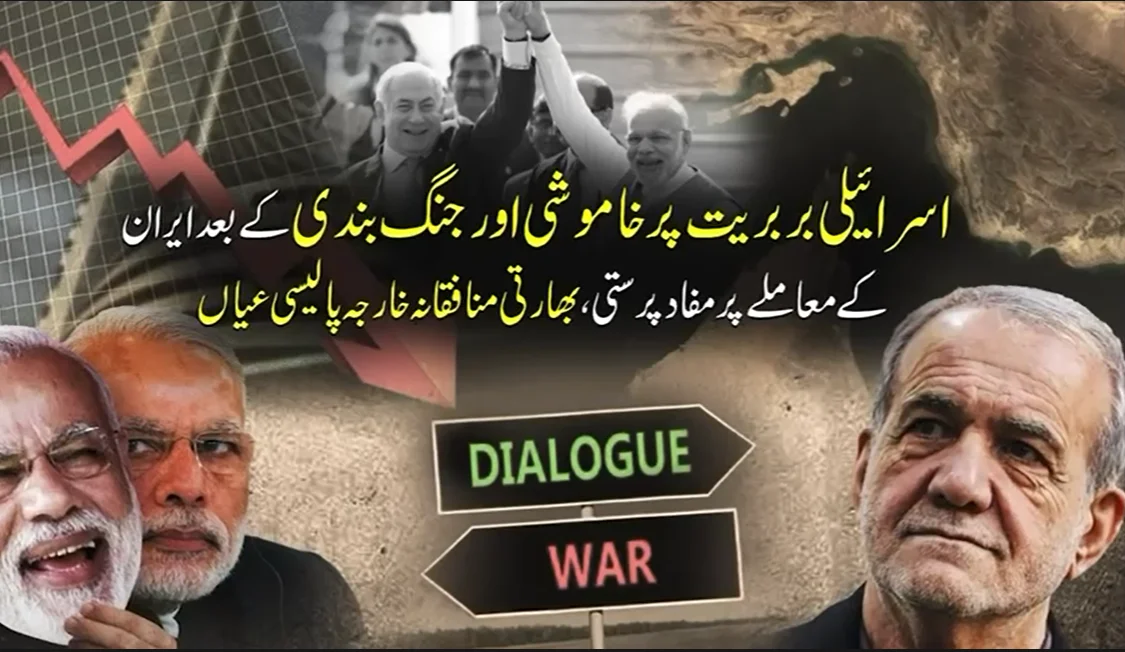
India’s Double Standards on the Israel–Iran Conflict Come Under Scrutiny
New Delhi / Tehran — Following the recent military confrontation between Israel and Iran, India's foreign policy has come under renewed scrutiny, with international observers questioning New Delhi's diplomatic approach. Analysts argue that India's response has largely reflected strategic, economic, energy, and security interests rather than a consistent policy based on principles.
According to the Indian news agency ANI, Prime Minister Narendra Modi held a telephone conversation with the President of Iran, during which both leaders discussed regional developments. Modi emphasized that disputes should be resolved through diplomacy and dialogue rather than military confrontation.
Observers have highlighted the sequence of India's diplomatic engagements in the lead-up to and aftermath of the conflict. Reports note that Prime Minister Modi visited Israel shortly before the outbreak of hostilities, reinforcing strategic ties between the two countries. During the conflict, India maintained a cautious public stance while continuing to call for restraint. After the ceasefire, New Delhi renewed diplomatic engagement with Tehran, with analysts pointing to India's energy security and trade interests as key factors.
During the conversation with the Iranian President, Modi also stressed the importance of freedom of navigation through the Strait of Hormuz, describing it as vital for regional stability and global trade. Experts note that the waterway is particularly significant for India's oil imports and commercial shipping.
Key Points
- Strategic Balancing: India continues to maintain diplomatic relations with both Israel and Iran while pursuing its national interests.
- Energy Security: Stable access to energy supplies remains a major factor shaping India's engagement with Tehran.
- Regional Stability: India has reiterated its support for resolving regional disputes through dialogue and diplomacy.