

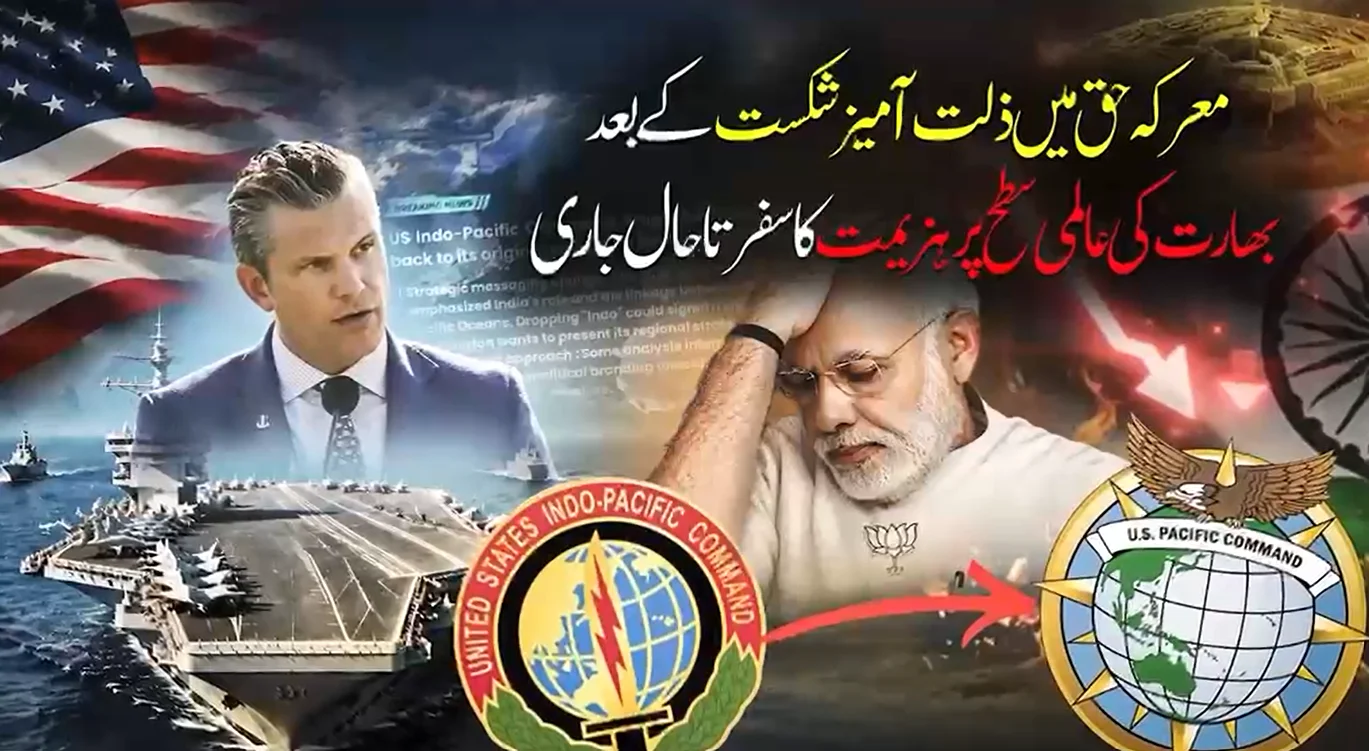
Global Strategic Shift: US Restores ‘Pacific Command’ Name, Drops ‘Indo’ from Indo-Pacific Command
Washington / Islamabad: A significant development has emerged from the evolving geopolitical landscape of South Asia as the United States Department of Defense (Pentagon) has reportedly restored the historic name U.S. Pacific Command, removing the term “Indo” from what had been known as the Indo-Pacific Command.
According to a press release issued by the command, the change has taken immediate effect. International observers believe that reversing the 2018 renaming decision has sparked renewed debate about India's strategic standing and role in the region.
Defense analysts argue that India had long promoted itself as a “net security provider” in the region, a narrative that gained support among several Western countries. However, recent regional developments and changing geopolitical realities have prompted fresh assessments regarding military capabilities and strategic influence in South Asia.
Analysts note that shifting regional dynamics have highlighted the importance of geography, economic partnerships, and defense preparedness. Pakistan, owing to its strategic location and regional connectivity, continues to hold an important position in the broader security architecture of the region.
Indian defense analyst Pravin Sawhney described the reported name change as a significant strategic setback for New Delhi.
According to his analysis:
- The move may indicate changing geopolitical calculations in Washington regarding South Asia.
- China and Pakistan could see greater strategic relevance in emerging regional frameworks.
- Existing diplomatic and economic disagreements between the United States and India may continue to influence bilateral relations.
Foreign policy experts emphasize that changes in the names of military commands are rarely symbolic alone. Such decisions often reflect evolving strategic priorities, future operational planning, budget allocations, and shifting regional partnerships. Observers believe the development will be closely watched by policymakers and strategic communities across Asia and beyond.