

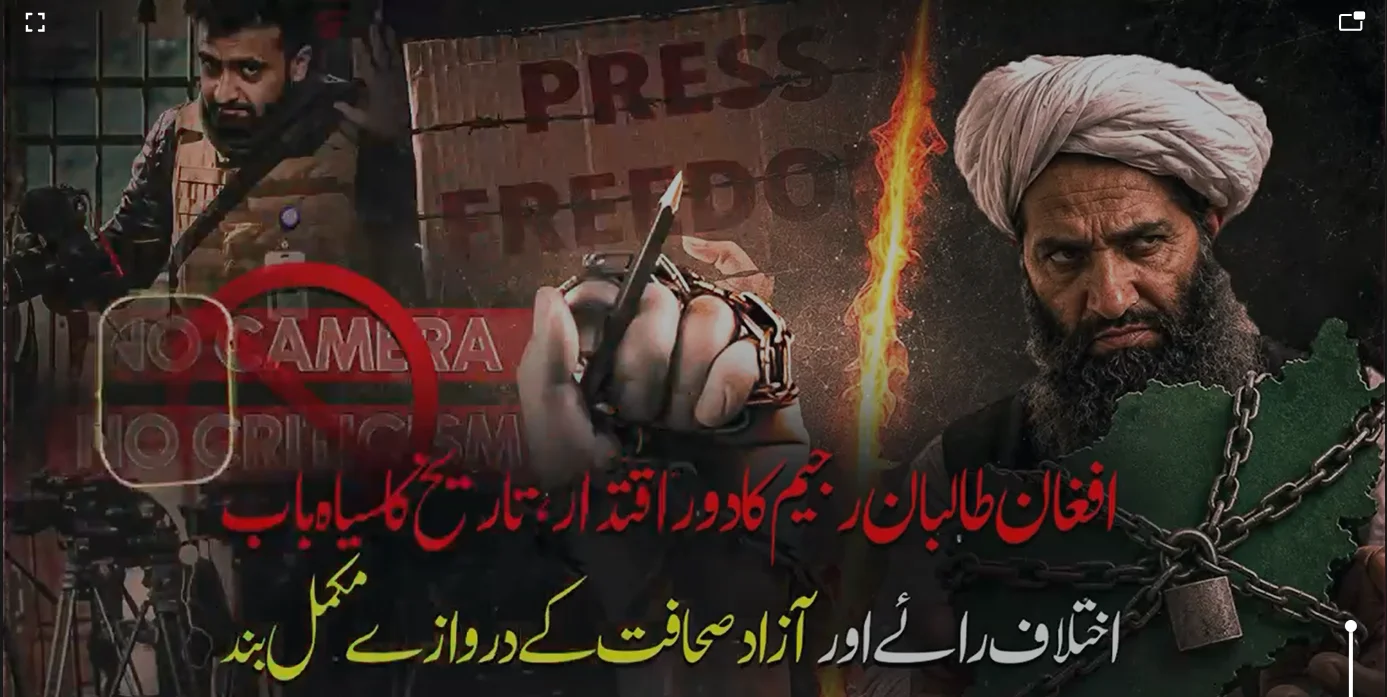
Five Years of Taliban Rule: Independent Journalism Crushed as Censorship Tightens
Human Rights Watch and UN Reports Expose Abuse, Arbitrary Detentions and the Systematic Exclusion of Women from Afghanistan’s Media
Kabul / Washington (Web Desk) — During five years of Taliban rule, efforts to suppress dissent and silence independent media in Afghanistan have intensified. Reports from international human rights organizations and United Nations monitoring missions describe a media environment increasingly shaped by censorship, intimidation, restrictions and alleged abuses against journalists.
Women Journalists Forced Out as Media Outlets Shut Down
According to reports cited from Modern Diplomacy and Human Rights Watch (HRW), restrictions on critical journalism intensified following the Taliban takeover.
Women Media Workers Pushed Out: Strict policies and restrictions have reportedly forced a large majority of Afghanistan’s women journalists and media workers out of the profession.
Media Outlets Forced to Close: Hundreds of radio stations, newspapers and news agencies have reportedly faced closure amid restrictions on fundamental freedoms and severe financial pressures.
Journalists Targeted: Human Rights Watch researcher Fereshta Abbasi has highlighted allegations that journalists criticizing Taliban policies have faced harsh punishment, detention and mistreatment.
UN Documentation: Rights Violations and Arbitrary Detentions
According to documentation attributed to the United Nations Assistance Mission in Afghanistan (UNAMA), hundreds of journalists have faced serious violations of their fundamental rights, while numerous journalists have reportedly been subjected to arbitrary or unlawful detention.
Key Findings
Organized Propaganda Networks: Analysts cited in the report allege that attempts are being made to control the narrative through restrictions on international media and coordinated activity involving bots and fabricated social-media accounts.
Suppression of Independent Reporting: Critics argue that restrictions on independent journalism make it more difficult to document alleged human rights abuses and controversial government policies.
Independent Media as a Symbol of Resistance: Afghan media executive Saad Mohseni has emphasized that despite intense pressure and restrictions, independent media remains essential for transparency, accountability and Afghanistan’s democratic future.
The Future of Afghan Journalism
The continued restrictions on journalists and media organizations have raised serious concerns about freedom of expression and access to reliable information in Afghanistan. International rights groups continue to call for greater protection of journalists, an end to arbitrary detention and the restoration of fundamental media freedoms.