

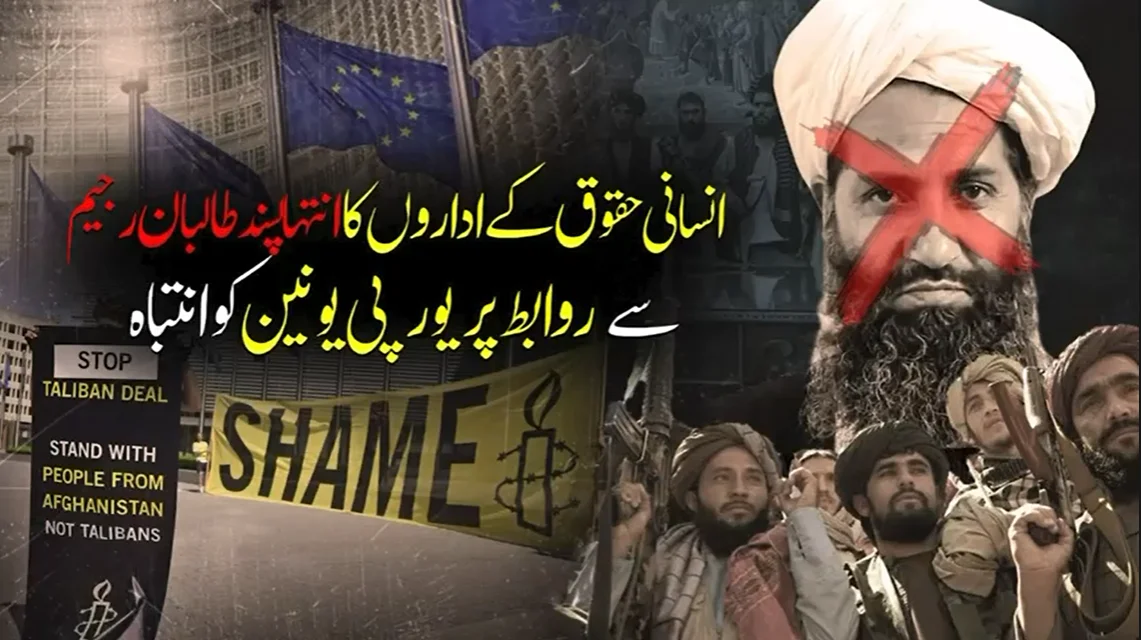
European Union Face Criticism Over Engagement with Taliban Amid Human Rights Concerns in Afghanistan
Brussels (Web Desk): International human rights organizations have expressed concern over the human rights situation in Afghanistan under the Taliban. Human Rights Watch (HRW) has criticized the European Union's recent engagement with Taliban representatives, arguing that diplomatic contacts should not undermine accountability for alleged human rights violations.
The Taliban government has not been formally recognized by most countries, with many governments citing concerns over human rights, governance, and the rights of women and girls.
Observers have also debated what they describe as an inconsistency between the European Union's criticism of Taliban policies and its continued diplomatic engagement with the group.
Human Rights Watch and United Nations Raise Concerns Over Taliban Policies
International human rights organizations and diplomats have continued to voice concern over restrictions imposed on the Afghan population, particularly women and girls. Among the key issues raised are:
Restrictions on Fundamental Freedoms:
According to Human Rights Watch, the Taliban have imposed severe restrictions on media freedom and have detained journalists, political opponents, and human rights defenders in a number of reported cases.
Limits on Women's Rights:
Rights organizations state that the Taliban have prohibited girls from attending secondary and higher education, while also imposing extensive restrictions on women's employment, public participation, and freedom of movement.
Denmark's Statement at the United Nations:
Christina Markus Lassen stated at the United Nations that Afghan women and girls continue to face systematic exclusion from public life and called for stronger international efforts to protect their fundamental rights.
Human rights organizations maintain that the situation in Afghanistan requires continued international attention and accountability. The Taliban, for their part, have defended their policies as being consistent with their interpretation of Islamic law and Afghanistan's cultural values, while rejecting many of the criticisms made by international organizations.