

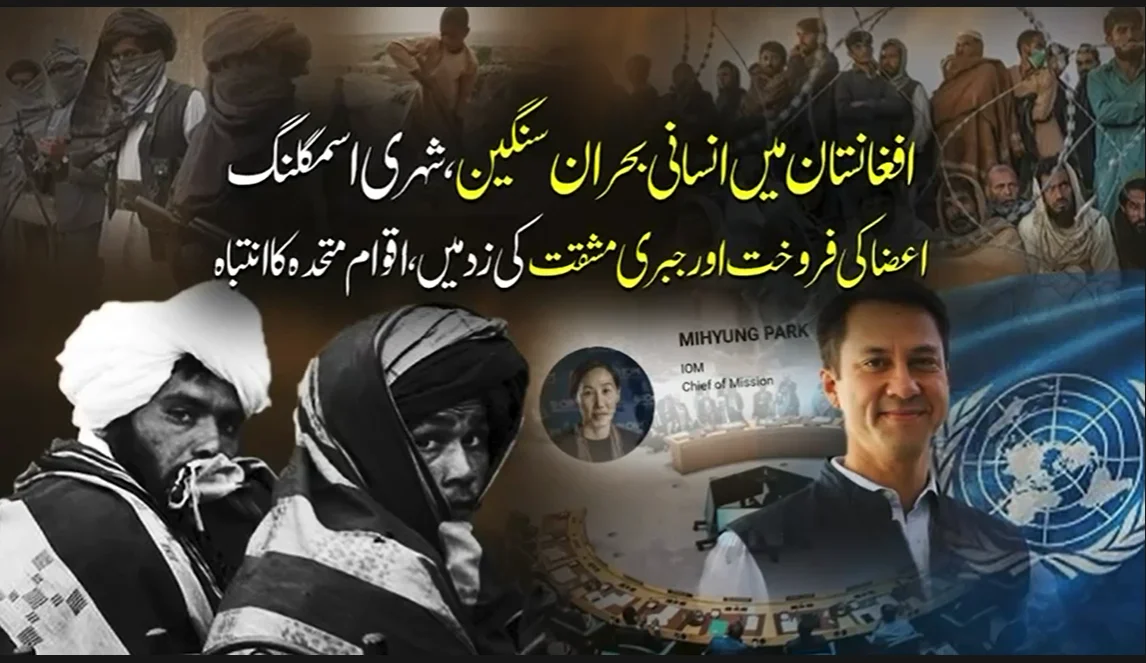
Afghanistan’s Humanitarian Crisis Deepens as Citizens Face Trafficking, Organ Sales and Forced Labour: UN Warning
The Taliban regime’s failed economic policies have pushed Afghanistan to the brink of disaster, while human trafficking and the exploitation of vulnerable citizens have reached alarming levels.
The United Nations Office on Drugs and Crime (UNODC) and the International Organization for Migration (IOM) have warned that the risks of human trafficking, exploitation and forced labour have increased to unprecedented levels across Afghanistan.
According to the United Nations, the mass return of refugees, economic decline and restrictions on women’s rights have made Afghan citizens easy targets for human traffickers.
Returnees Struggle with Unemployment and Basic Expenses
According to the latest Returnee Resilience Overview Survey, only 11 percent of returning Afghan refugees are employed, while 56 percent are unable to meet even their basic living expenses.
The United Nations warned that the severe economic crisis has exposed Afghan citizens to serious forms of exploitation, including:
- Debt bondage
- Forced labour
- Forced marriages
- Trafficking in human organs
Criminal networks are also using deception and coercion to force Afghan citizens into scam operations and online fraud.
Social Media Being Used to Lure Trafficking Victims
IOM Director General Amy Pope said criminal groups operating across Asia are using fake job advertisements on social media to lure people into human trafficking and subject them to physical and psychological abuse.
Immediate Anti-Trafficking Measures Needed
According to Polleak Ok Serei, UNODC’s representative in Afghanistan, immediate and effective measures are essential to prevent human trafficking and identify and protect victims.
IOM Chief of Mission in Afghanistan Mihyung Park warned that the extraordinary return of Afghan migrants has placed intense pressure on local communities.
She said unemployment and the shortage of basic services are forcing many people to adopt irregular and illegal migration routes.
The Taliban regime’s poor governance, international isolation and drug-dependent economy have turned Afghanistan into a centre of narco-terrorism and growing regional crime.