

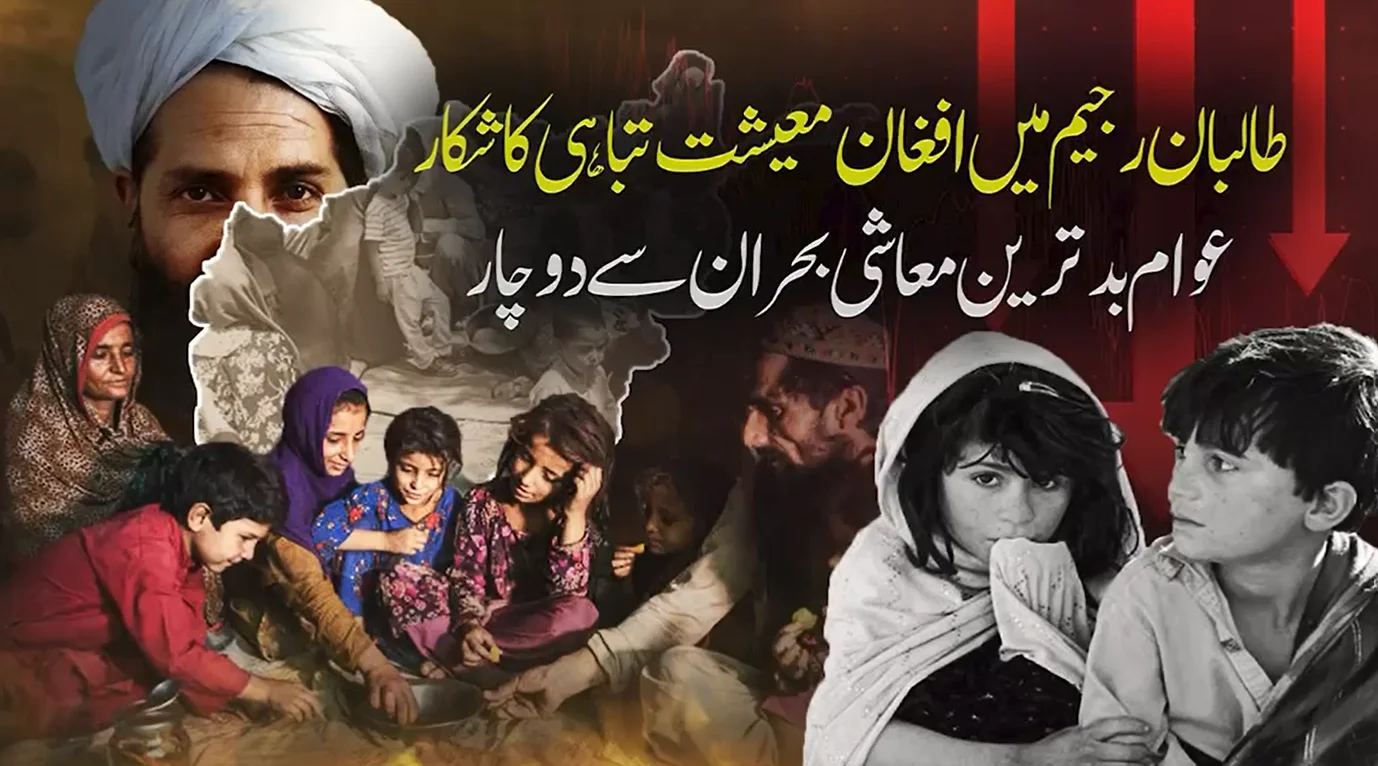
Afghan Economy Nears Collapse Under Taliban Regime, Civilians Face Severe Crisis: Report
Kabul — August 29, 2026: Afghanistan’s economic and humanitarian crisis has reached critical levels amid what the report describes as ineffective economic policies and unrealistic strategies under the Taliban regime.
The independent Afghanistan Analysts Network (AAN) has published a comprehensive analysis questioning the Taliban administration’s claims of economic stability and self-reliance.
GDP Decline and Labour Market Stagnation
According to the report, Afghanistan’s economy has continued to struggle since the Taliban returned to power.
- Declining GDP: Continued weakness in national output has placed further pressure on the country’s financial and economic structure.
- Rising unemployment: The labour market has struggled to provide sufficient employment and sustainable livelihoods for ordinary citizens.
- Struggle for survival: Severe poverty has reportedly forced millions of families to sell assets, withdraw children from school and send them into work at an early age.
Restrictions on Women and a Growing Humanitarian Crisis
The report highlights restrictions on women’s access to education and employment, arguing that these measures have significantly reduced women’s participation in the Afghan economy and placed additional pressure on vulnerable households.
“Economic hardship is forcing women and children to undertake insecure, low-paid work from home, while families are sacrificing their children’s future simply to survive.” — Afghanistan Analysts Network
Olga Cherevko, spokesperson for the United Nations Office for the Coordination of Humanitarian Affairs (OCHA), has also expressed concern over the continuing humanitarian crisis and difficult economic conditions in Afghanistan.
The report argues that the country’s worsening economic conditions and restrictions on basic opportunities are leaving large sections of the Afghan population struggling to meet essential needs.