

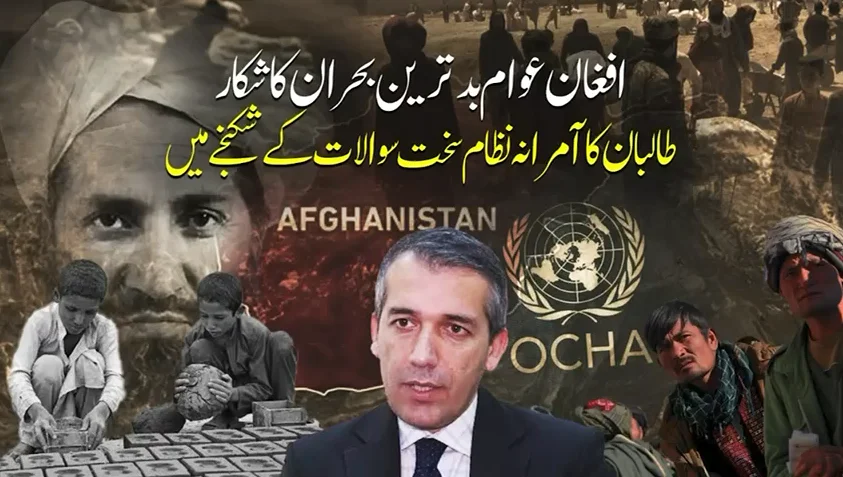
Afghan Citizens Face Severe Humanitarian Crisis Under Taliban Rule
UN and Experts Reveal Alarming Figures of Hunger and Economic Collapse
Kabul — Poor economic policies and administrative failures under the Taliban government have pushed Afghanistan into one of the worst humanitarian and economic crises in its history. Reports by international observers and human rights organizations indicate that the Taliban administration has failed to provide citizens with basic human rights, employment opportunities, and economic security.
Reports from Afghan media and international organizations show that under the current system of governance, job opportunities have nearly disappeared, forcing a large part of the population to struggle for survival.
UN OCHA Report Highlights Growing Humanitarian Crisis
The United Nations Office for the Coordination of Humanitarian Affairs (OCHA) has highlighted the ongoing crisis in Afghanistan, stating that millions of Afghan families are facing severe economic hardship and food insecurity despite limited global attention.
According to Afghan sources and independent reports, key aspects of the crisis include:
- 74% of the population facing hunger: The lack of employment opportunities has left more than 74% of Afghans struggling with severe food shortages.
- Shortage of clean drinking water: The destruction of basic infrastructure has created a serious shortage of safe drinking water, affecting daily life.
- Restrictions on women and lack of resources: Humanitarian officials say funding shortages and restrictions on women have further worsened the situation.
29 Million Afghans Living Below Poverty Line
Former Afghan presidential spokesperson Sediq Sediqqi criticized the Taliban government’s governance model, stating that current policies have pushed Afghanistan into extreme poverty. He claimed that around 29 million Afghan citizens are now living below the poverty line, which he described as evidence of economic policy failures.