

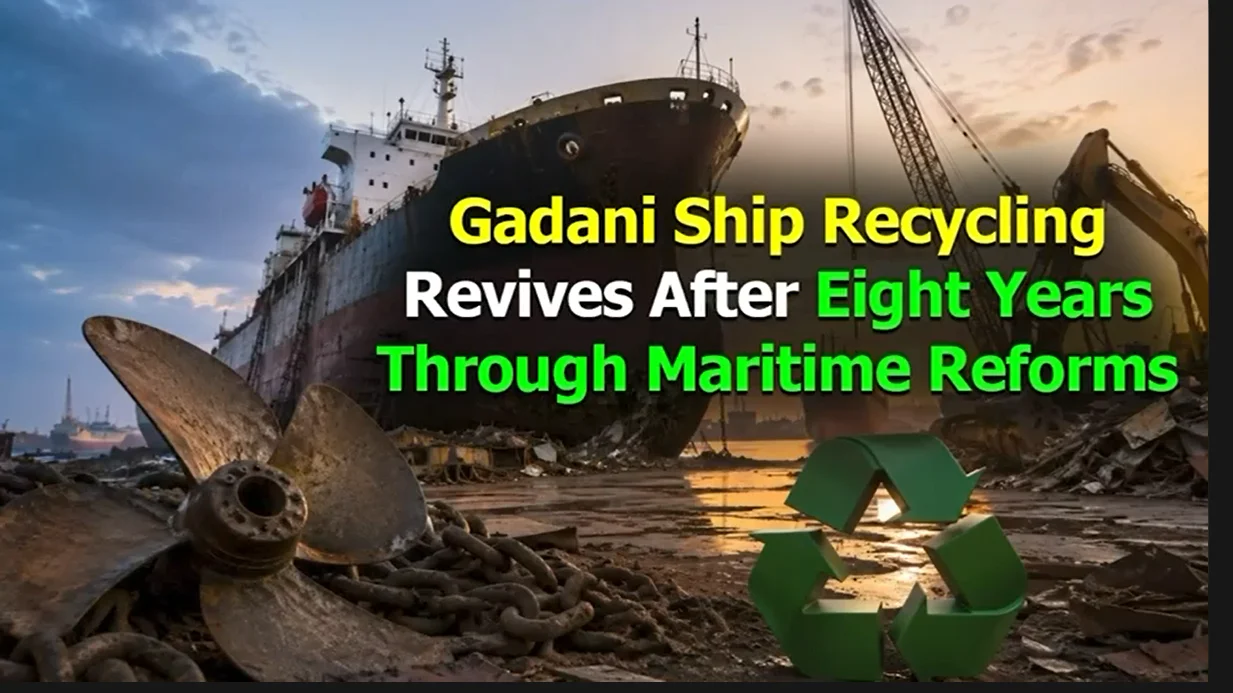
Ship Recycling Resumes at Gadani After Eight Years as Seven Vessels Arrive
Karachi/Gadani: Ship-breaking operations have resumed at Gadani Shipyard after an eight-year suspension following the federal government’s decision to formally recognise ship recycling as an industry and the implementation of comprehensive reforms by the Maritime Task Force. In the initial phase, seven vessels have arrived at the yard.
Maritime Task Force and NLC Efforts Bear Fruit
The revival of the ship recycling industry in Gadani is the result of joint efforts by the National Logistics Corporation (NLC) and other key institutions represented in the Maritime Task Force.
The federal government is continuing to take measures to bring the industry in line with international standards.
Upgrades Under the Hong Kong Convention and IMO Regulations
Modernisation of shipyards: Ship recycling yards are being upgraded in accordance with the standards prescribed by the International Maritime Organization (IMO).
Implementation of the Hong Kong Convention: Of Gadani’s 16 ship recycling yards, nine have been modernised in line with the international environmental standards of the Hong Kong Convention, while the remaining seven are currently undergoing the final stage of inspection.
Environmental protection: To protect the coastal environment and marine life from pollution, the government also plans to establish modern treatment, storage and disposal facilities in Gadani.
Positive Impact on the National Economy and Steel Industry
The revival of the ship recycling industry is expected to prove a game changer for Pakistan’s blue economy and domestic industrial development.
Key Figures Highlighting the Economic Benefits
Millions of dollars in economic contribution: Each vessel recycled at Gadani is expected to contribute approximately $25 million to the national economy.
Meeting local steel demand: Once Gadani Shipyard becomes fully operational, it will independently meet around 30 percent of Pakistan’s total domestic demand for steel scrap, significantly reducing the cost of importing raw materials.