

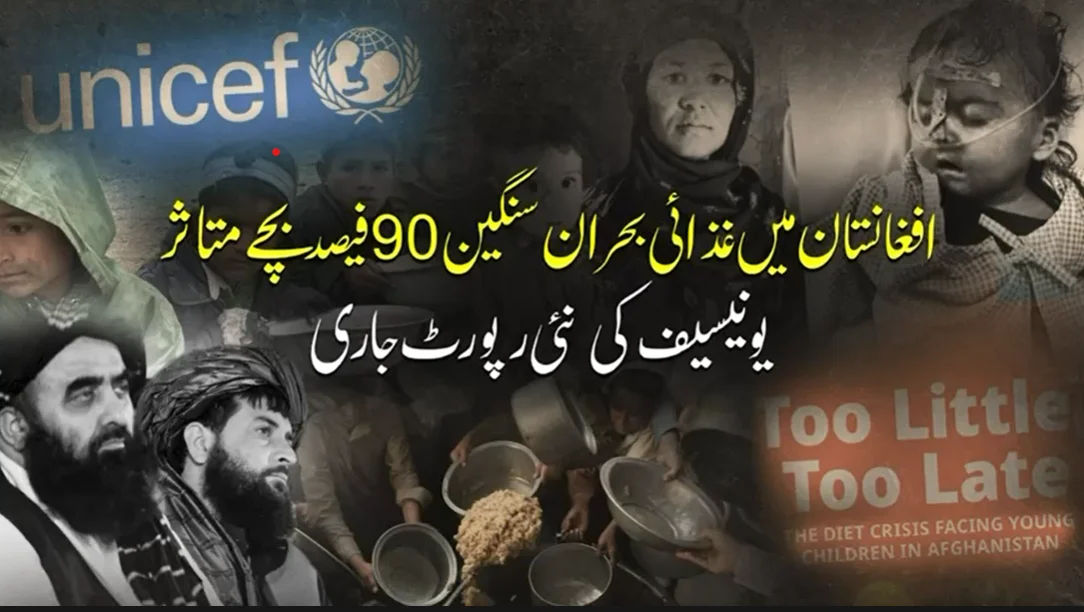
90% of Children in Afghanistan Suffer from Severe Nutritional Deficiencies: UNICEF
Poor Taliban Policies and Administrative Failures Put Millions of Children's Futures at Risk
KABUL: The United Nations Children's Fund (UNICEF) has issued a fresh emergency warning over the deepening humanitarian crisis in Afghanistan. According to UNICEF's latest report, inadequate economic policies, international isolation, and serious governance challenges have left millions of Afghans—especially children—vulnerable to hunger, poverty, and deprivation.
Key Findings from UNICEF's Survey
UNICEF's report highlights the worsening food insecurity, deteriorating healthcare, and lack of access to clean water across Afghanistan:
- 3.7 Million Children Affected: Nearly 3.7 million Afghan children are currently facing severe food insecurity.
- Nutritional Deficiencies: Around 90% of Afghan children do not receive the essential nutrients required for healthy physical and cognitive development.
- Children Under Two Most Vulnerable: More than 85% of children requiring urgent treatment and nutritional support are under the age of two.
- Girls Face Greater Risks: Severe malnutrition has disproportionately affected girls, with significantly higher rates of wasting and physical weakness compared to boys.
- Serious Health Warning: Persistent malnutrition has increased the risk of death and long-term health complications among Afghan children by six times compared with normal conditions.
Experts Call for Greater Focus on Humanitarian Needs
International experts and observers say Afghanistan's humanitarian crisis requires urgent attention to improve economic conditions, restore livelihoods, and expand access to food and healthcare. They warn that prolonged economic hardship, unemployment, and limited opportunities continue to deepen poverty and food insecurity, placing millions of civilians, particularly children, at increasing risk.