

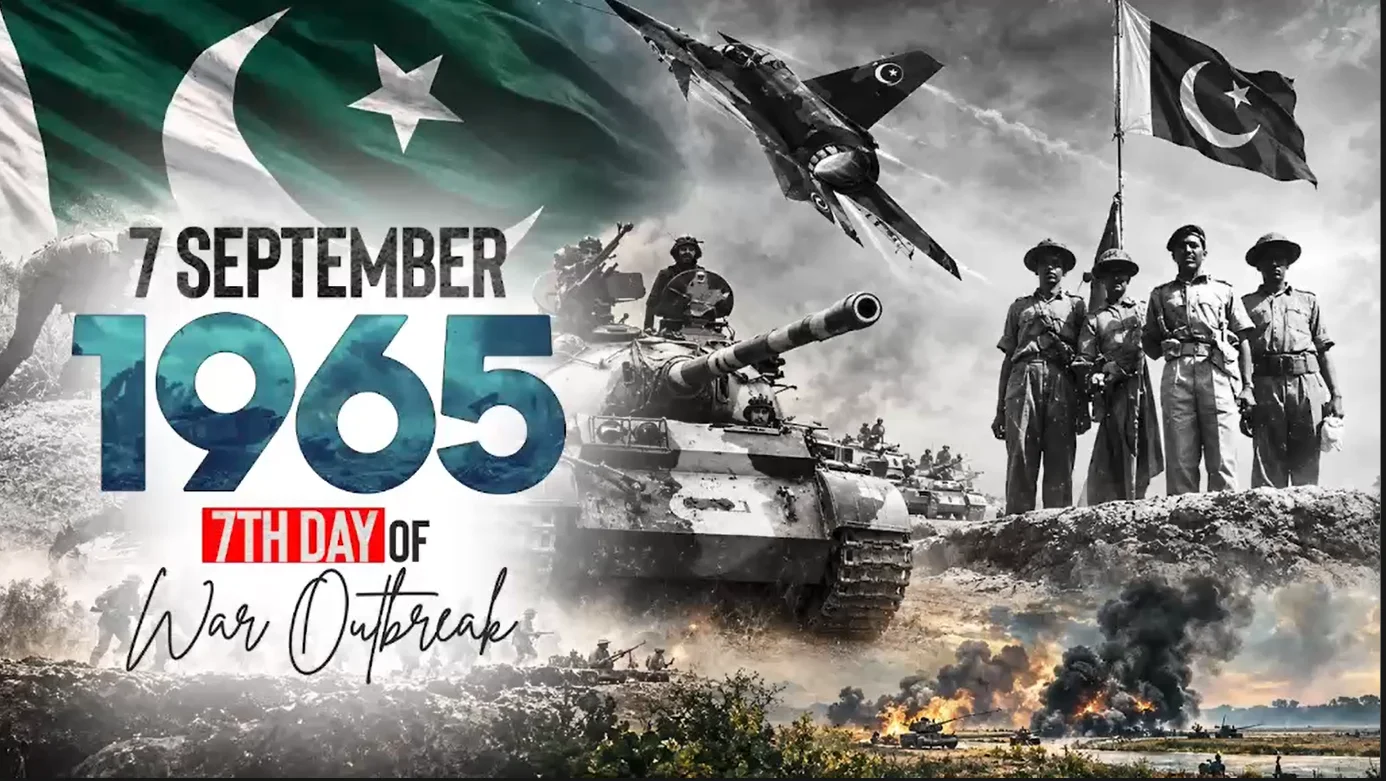
Seventh Day of September War: PAF Launches Devastating Strikes, India Faces Setback on Lahore Front
On the seventh day of the 1965 Pakistan-India war, September 7, the Pakistan Air Force (PAF) created history with a series of powerful attacks. In a single day, 31 Indian aircraft were destroyed, dealing a major blow to the enemy’s air capabilities. With these losses, the total number of Indian fighter aircraft destroyed rose to 53.
Indian Spokesperson’s Admission and PAF’s Success
Following continued setbacks on the battlefield, an Indian spokesperson openly admitted that the Indian offensive on the Lahore, Suleimanki and Ferozepur fronts had failed badly and that Indian forces had suffered heavy human and material losses on every front.
President Field Marshal Ayub Khan paid rich tribute to the Shaheens of the Pakistan Air Force for their outstanding performance.
Threat to East Pakistan and Pakistan Navy’s Strong Defence
In an attempt to overcome the embarrassment caused by its failures on the western front, India threatened to expand the war to East Pakistan. In response, Governor of East Pakistan Abdul Monem Khan issued a clear warning that any aggression would have dire consequences for India.
Meanwhile, Pakistan Navy Chief Admiral A.R. Khan conveyed a message to naval personnel to live up to the expectations of the nation in protecting the country’s maritime boundaries. PNS Babar, Khyber, Badr, Jahangir, Alamgir, Shah Jahan and Tipu Sultan established a strong naval cordon, keeping the enemy confined to its own maritime limits.
Advance in Kashmir and Appeal to the International Community
President Ayub Khan made a strong appeal to UN Secretary-General U Thant, urging the international community to fulfil the commitments made to the people of Kashmir. He made it clear that the only path to peace in Kashmir was a plebiscite.
Major General Akhtar Hussain was awarded the Hilal-i-Jurat for demonstrating exceptional bravery in the Jaurian sector. Meanwhile, the spokesperson for the Kashmir Revolutionary Council warned India that the people of Kashmir would thwart its hostile designs.
Retired Soldiers Called Back to Duty and Protection of Minorities
To further strengthen the country’s defence, Army Commander-in-Chief General Musa ordered all retired military officers and personnel to immediately report for duty.
Despite the wartime situation, Pakistan demonstrated its commitment to high moral values by assuring the Sikh community that the sanctity of all their sacred religious sites would be protected at all costs.
Key Events of September 7 at a Glance
Air Superiority: 31 Indian aircraft destroyed in a single day.
Indian Setback: Indian defeat acknowledged on the Lahore, Suleimanki and Ferozepur fronts.
Naval Defence: Pakistan Navy kept the enemy navy confined within its own maritime limits.
National Mobilization: Retired military officers and personnel were called back to duty.
Protection of Minority Rights: The Sikh community was given a full assurance regarding the protection of its sacred religious sites.