

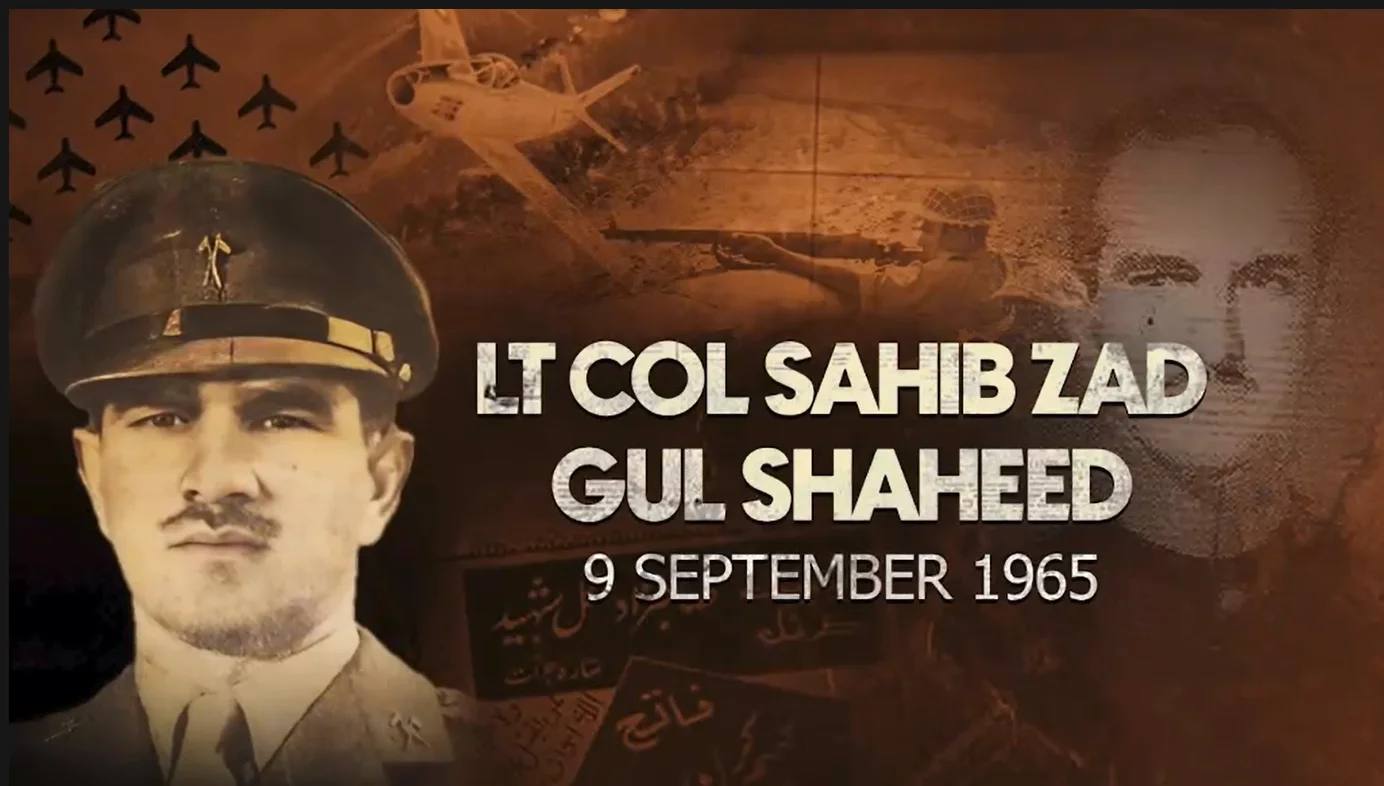
September 1965 War: Timeless Story of the Bravery of Major Muhammad Ashraf and Lieutenant Colonel Sahibzada Gul
Sialkot and Khemkaran Fronts: Great Sacrifices of 1965 War Heroes Major Ashraf and Lieutenant Colonel Sahibzada Gul
Sacrificing Their Lives in Defence of the Motherland: Brave Pakistan Army Officers Martyred on September 9
Islamabad (Web Desk) — During the 1965 Pakistan-India war, officers and soldiers of the Pakistan Army wrote a new chapter of courage and bravery while defending the motherland. On the ninth day of the war, September 9, Lieutenant Colonel Sahibzada Gul and Major Muhammad Ashraf Khan embraced martyrdom while fighting bravely against the enemy.
Major Muhammad Ashraf Khan belonged to a support battalion and was assigned the responsibility of defending Sialkot. On September 8, his battalion inflicted heavy losses on the enemy. The following day, when Indian forces attempted to advance toward Sialkot Cantonment, Major Ashraf moved forward to stop them and destroyed two enemy tanks. While reviewing the battlefield in his jeep, he came under enemy fire and embraced martyrdom.
Meanwhile, on the Kasur front, Lieutenant Colonel Sahibzada Gul was commanding an armoured regiment. After pushing back Indian forces, he captured the Khemkaran sector on September 8. On September 9, despite fierce resistance from the enemy, he also secured control of the Wal Thwa railway station. The strategically important station was subjected to a strong counterattack by Indian forces seeking to recapture it. While defending the position, Lieutenant Colonel Sahibzada Gul sacrificed his life.
In recognition of his unparalleled bravery, the Government of Pakistan posthumously awarded Lieutenant Colonel Sahibzada Gul the Sitara-e-Jurat. The great sacrifices of Major Muhammad Ashraf Khan and Lieutenant Colonel Sahibzada Gul will always be remembered in golden letters in Pakistan’s military history.