

Propaganda vs. Reality: Balochistan's Per-Capita Health and Education Funding Reportedly Higher Than Punjab's
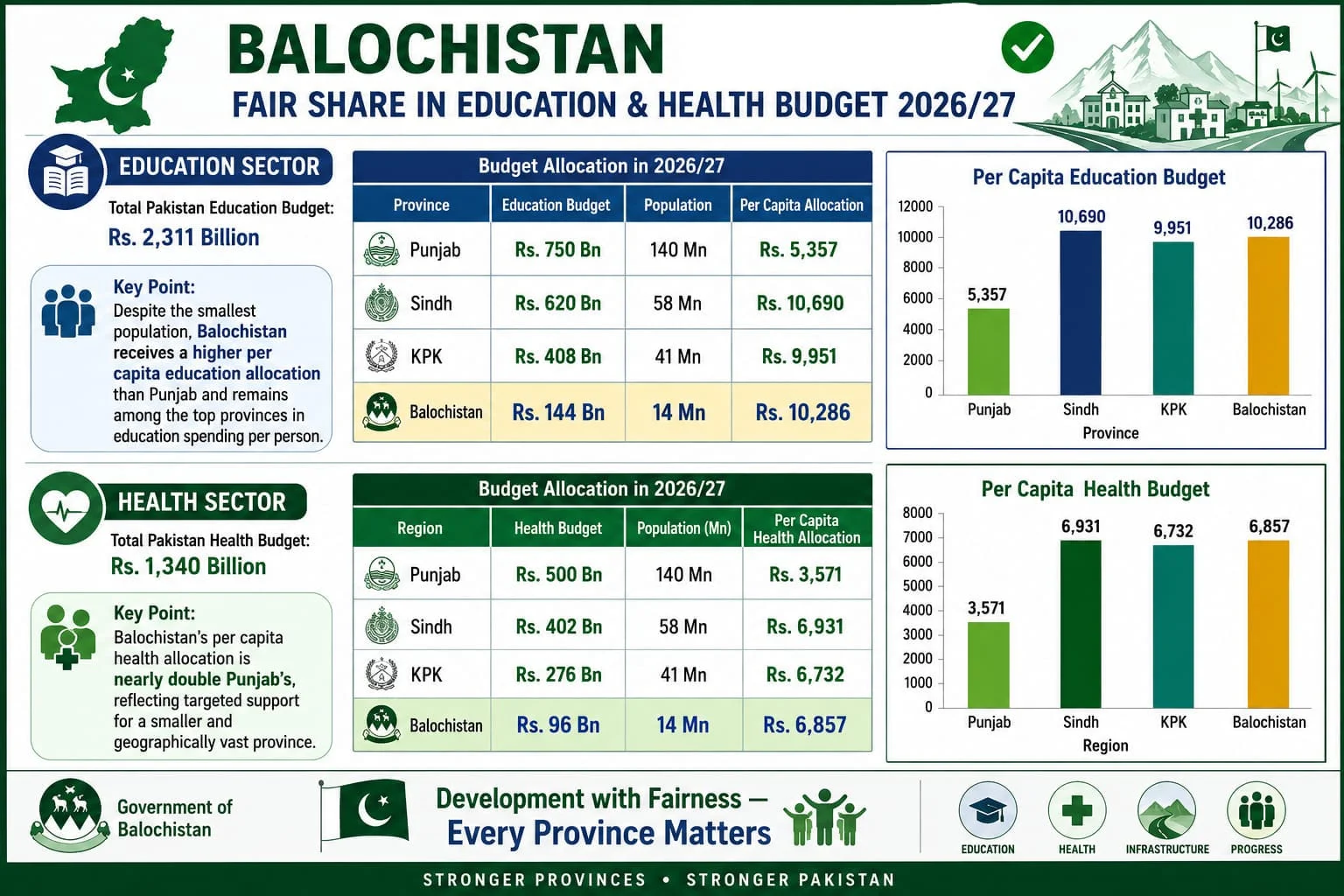
Quetta : According to the report, official budget figures for the fiscal year 2026–27 challenge claims that Balochistan has been neglected in development spending. The report argues that despite having a population of approximately 14 million, Balochistan has received significantly higher per-capita allocations in the education and health sectors than Punjab, taking into account the province's vast geography and development needs.
Education Budget: Per-Capita Funding in Balochistan Reportedly Double That of Punjab
The report states that human resource development has been given priority in the allocation of provincial shares from Pakistan's overall education budget of PKR 2.311 trillion.
According to the budget comparison:
- Punjab: A total education allocation of PKR 750 billion, equivalent to approximately PKR 5,357 per person.
- Balochistan: A total education allocation of PKR 144 billion, equivalent to approximately PKR 10,286 per person due to its smaller population.
The report claims that this per-capita allocation is nearly double that of Punjab.
Health Sector: Significant Allocations Highlighted
The report further states that out of Pakistan's total health budget of PKR 1.340 trillion, PKR 96 billion has been allocated to Balochistan.
Per-capita calculations presented in the report show:
- Balochistan: Approximately PKR 6,857 per person for health services.
- Punjab: Approximately PKR 3,571 per person for health services.
Conclusion Presented in the Report
The report concludes that the higher per-capita allocations demonstrate an effort to address Balochistan's developmental challenges and support improvements in education and healthcare. It argues that investment in these sectors is intended to contribute to a more prosperous and self-reliant future for the province's population.
Note: The figures and conclusions above are presented as claims within the cited report. Verification against official federal and provincial budget documents would be necessary to independently confirm the allocations and comparisons.