

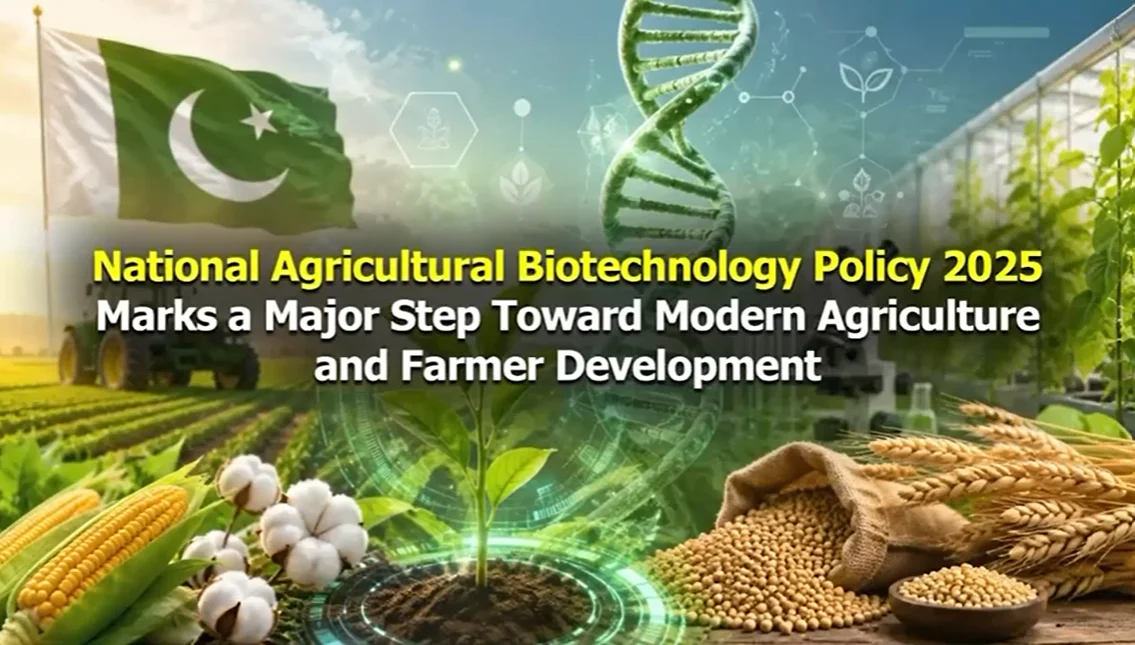
Pakistan Approves National Agricultural Biotechnology Policy 2025
Federal Cabinet Approves National Agricultural Biotechnology Policy 2025
Islamabad: The Government of Pakistan has taken a major step toward modernizing the country's agricultural sector. Chaired by the Prime Minister, the Federal Cabinet has officially approved the National Agricultural Biotechnology Policy 2025, aimed at increasing crop production through modern biotechnology, strengthening food security, and improving the economic well-being of farmers.
The long-term policy was prepared after a two-and-a-half-year consultative process involving leading agricultural scientists, farmers, representatives of the agricultural industry, and other relevant stakeholders from across the country.
Promoting Modern Agricultural Technology and Climate Resilience
The primary objective of the new policy is to modernize conventional farming through science and innovation.
Modern biotechnology will help farmers increase crop yields while enabling the cultivation of crop varieties that are more resistant to climate change and various plant diseases.
Under the policy, the cultivation of genetically modified (GM) maize has also been approved after successfully completing all national biosafety and regulatory requirements.
Economic Benefits and Export Growth
The use of advanced agricultural biotechnology is expected to generate significant economic benefits, particularly for Pakistan's maize industry.
Current Export Value: Pakistan's maize exports currently range between US$288 million and US$345 million.
Future Target: Effective implementation of the biotechnology policy aims to increase maize exports to US$1 billion.
Key Benefits: Reduced crop losses, promotion of responsible investment, and a substantial increase in farmers' per-acre income.
Summary: The effective implementation of the National Agricultural Biotechnology Policy 2025 is expected to play a key role in strengthening Pakistan's agricultural self-sufficiency and increasing valuable foreign exchange earnings.