

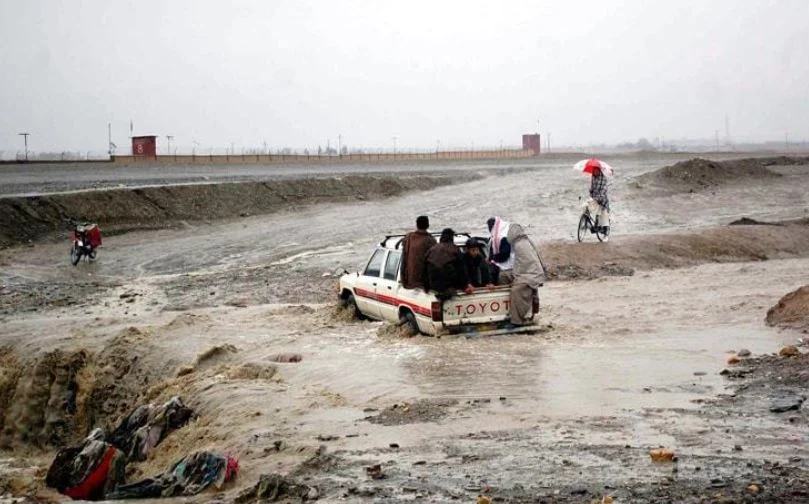
Monsoon Rain Alert: Flood Risk Issued for Balochistan
Islamabad: Pakistan's National Disaster Management Authority (NDMA) has issued a high alert for widespread monsoon rains expected from 1 July to 6 July 2026. According to the NDMA, the highest level of precaution has been advised for northern and eastern Balochistan, where heavy rainfall could trigger flash floods in seasonal streams and rivers.
The official advisory states that Punjab, Khyber Pakhtunkhwa, Gilgit-Baltistan, Azad Jammu and Kashmir, northern Balochistan, and upper Sindh are likely to experience heavy rain accompanied by thunderstorms during the six-day weather spell.
Balochistan has been identified as the province facing the greatest immediate risk. Districts including Zhob, Sherani, Barkhan, Sibi, Kohlu, Harnai, and Dera Bugti may experience flash flooding in hill torrents and seasonal streams. Provincial authorities have been directed to remain on high alert.
In Punjab, heavy rainfall is expected in Islamabad, Rawalpindi, Lahore, Murree, Galiyat, and Gujrat, with a risk of urban flooding in low-lying areas. Southern Punjab districts including Rajanpur, Layyah, Mianwali, Multan, Bahawalpur, and Dera Ghazi Khan are also expected to receive significant rainfall between 3 and 5 July.
Upper Sindh districts such as Larkana, Sukkur, Jacobabad, Khairpur, and Shaheed Benazirabad are forecast to receive monsoon showers beginning on 3 July.
In Khyber Pakhtunkhwa, heavy rainfall may cause flash floods in mountain streams across Dir, Swat, Chitral, Kohistan, Mansehra, and Abbottabad. Meanwhile, Gilgit-Baltistan and Azad Kashmir face an increased risk of landslides, which could temporarily block major highways in Astore, Skardu, Gilgit, Hunza, Diamer, Ghizer, Muzaffarabad, Neelum Valley, Rawalakot, Bagh, Bhimber, and Mirpur.
The NDMA has strongly advised residents and tourists to avoid unnecessary travel, particularly in mountainous regions and flood-prone streams, until 6 July. District administrations have also been instructed to keep rescue teams and dewatering equipment on standby.