

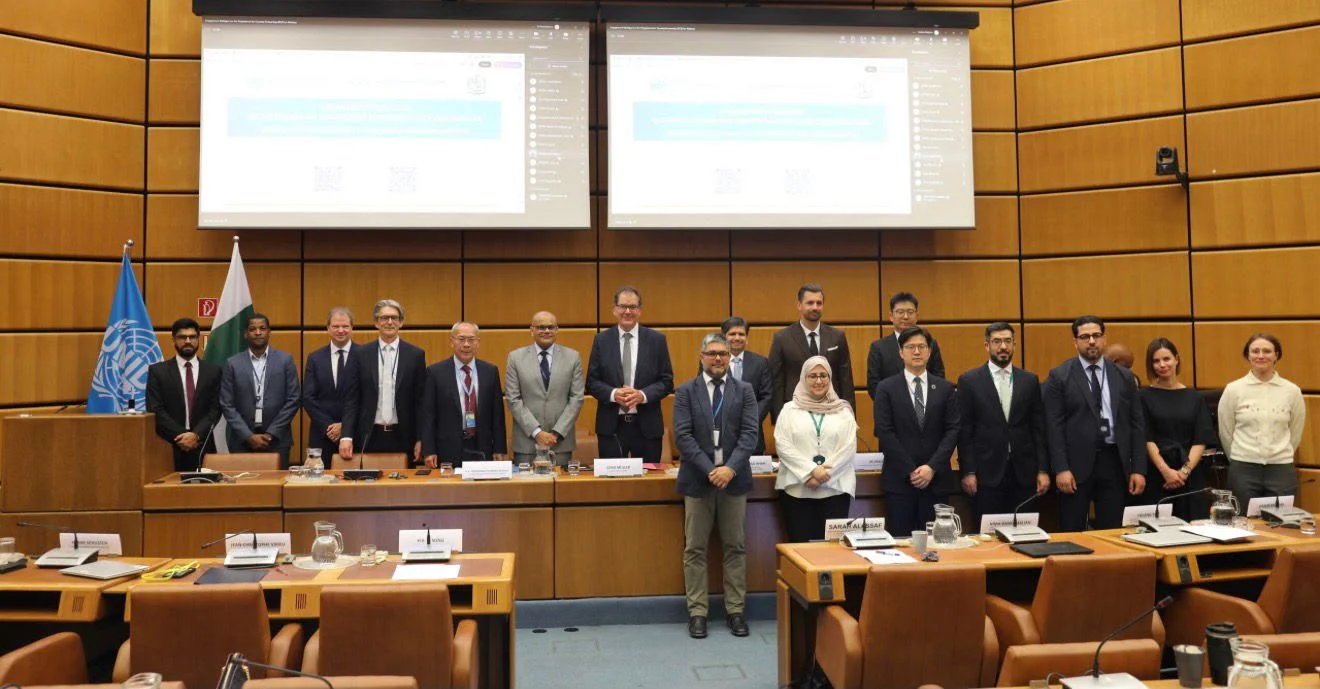
UNIDO Convenes Global Partners in Vienna to Back Pakistan's Strategic Industrial Roadmap (PCP 2025–2030)
The United Nations Industrial Development Organization (UNIDO) successfully convened international donors, Member States, and development partners at its headquarters to mobilize comprehensive technical and financial support for Pakistan's newly launched Programme for Country Partnership (PCP) 2025–2030. This high-level dialogue marks a critical step forward in accelerating Pakistan's industrial revitalization, export-led growth, and sustainable economic transition.
Institutional Alignment and High-Level Diplomatic Foundation
The PCP 2025–2030 framework represents a highly coordinated strategy between the government of Pakistan and UNIDO. The formal agreement was initially signed in February 2026 by Pakistan's Deputy Prime Minister and Foreign Minister, Mohammad Ishaq Dar, during an official state visit led by Prime Minister Shehbaz Sharif to Austria.
During the Vienna dialogue, UNIDO Director General Gerd Müller emphasized that the PCP serves as a primary vehicle for Pakistan's long-term industrial modernization, outlining the agency's commitment to deploying targeted technical cooperation, advanced technology transfers, and capacity-building frameworks.
Key Pillars of the PCP 2025–2030 Framework
The high-level engagement concluded with a renewed commitment to translate the PCP architecture into tangible development assistance. The strategic priorities highlighted during the briefing focus on five core economic vectors:
Value-Chain Development: Enhancing agro-industrial and manufacturing sectors to increase competitive output.
Green Industry & Clean Energy Transition: Modernizing industrial zones with eco-friendly technologies and reducing carbon footprints.
Sustainable Mineral Management: Capitalizing on Pakistan's vast mineral wealth through environmentally compliant extraction and processing.
Skills Development & Job Creation: Aligning vocational training with modern industrial demands to maximize youth employment.
Diplomatic Statement: Pakistan's Permanent Representative to UNIDO, Ambassador Kamran Akhtar, stated that the PCP is meticulously aligned with Pakistan's national development agenda. He underscored that moving toward an export-oriented industrial ecosystem and transitioning to clean energy remain paramount to securing the country's macroeconomic stability.
International Coalitions and Financial Support
The briefing generated strong multilateral consensus, with key global powers and financial institutions pledging structural alignment and support for Pakistan's industrial priorities. Major endorsements were officially delivered by:
China (Focusing on CPEC industrial integration and manufacturing supply chains).
The European Union (EU) & Member States (Supporting green regulations, compliance, and GSP+ standard maintenance).
Japan & Saudi Arabia (Pledging technology sharing and resource development).
The European Investment Bank (EIB) (Exploring sustainable infrastructure and green energy financing).
Both the Pakistani delegation and its global counterparts issued a joint call for robust, streamlined coordination mechanisms to ensure the swift, transparent, and effective implementation of the PCP over the next four years.