

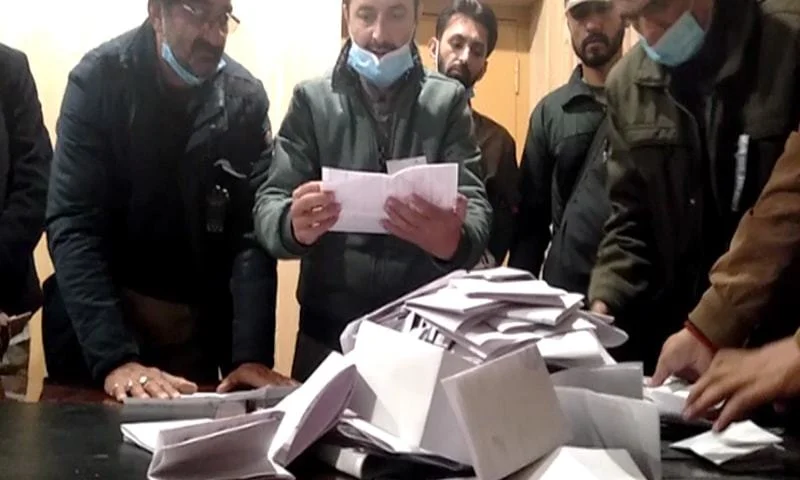
Gilgit-Baltistan Elections 2026: Vote Counting Underway Across 24 Constituencies As Unofficial Results Trickle In
GILGIT — Polling for the highly anticipated Gilgit-Baltistan Legislative Assembly elections concluded peacefully on Sunday, with vote counting currently underway across all 24 constituencies.
The electoral exercise, which experienced a four-month delay due to severe winter conditions, saw active participation from local voters. According to early, unofficial reports, the first sets of results have begun trickling in from various polling stations, setting up a competitive race among major political stakeholders.
High Turnout Amid Stringent Security Measures
The Election Commission of Gilgit-Baltistan finalized extensive security and administrative arrangements to ensure a transparent voting process from 8:00 AM to 5:00 PM. District Returning Officers (DROs) were granted magistrate-level authority to enforce the code of conduct strictly and maintain public order.
A total of 958,480 registered voters—comprising 503,772 male and 454,708 female voters—were eligible to exercise their right to vote. Caretaker provincial officials highly commended the public for their participation, emphasizing that free and fair elections remain the cornerstone of regional stability and development.
A Highly Competitive Political Landscape
The 2026 elections feature a fiercely competitive environment with 396 candidates vying for the 24 general seats. Major mainstream political parties, including the Pakistan Peoples Party (PPP), Pakistan Muslim League-Nawaz (PML-N), Pakistan Tehreek-e-Insaf (PTI), and Istehkam-e-Pakistan Party (IPP), have fielded prominent candidates alongside a substantial number of independent contenders.
Key Takeaway: While independent candidates dominate the numerical playing field, political analysts are closely watching key battleground constituencies like Hunza and Skardu, where neck-and-neck competitions are expected to dictate the formation of the next regional government