

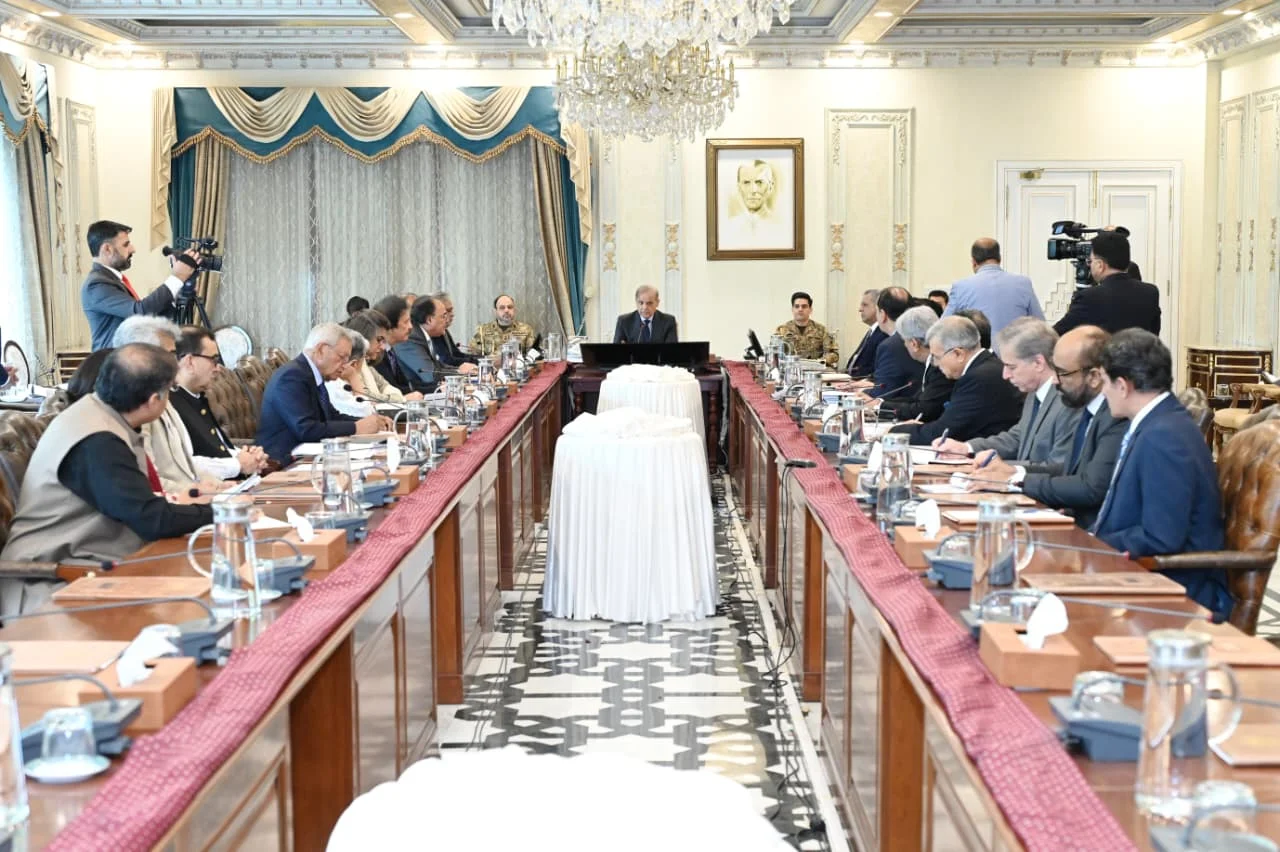
Economic Overhaul: PM Shehbaz Approves National Tariff Policy 2025-30
ISLAMABAD, June 4, 2026: Prime Minister Muhammad Shehbaz Sharif chaired a high-level review meeting focused on macroeconomic indicators and the implementation framework of the National Tariff Policy (NTP) 2025-30. The executive session culminated in the approval of strategic tariff rationalization strategies designed to lower input costs, stimulate industrialization, and boost exports.
PM Orders Integration of Artificial Intelligence (AI) in Tariff Regimes
Addressing the financial leadership, Prime Minister Shehbaz Sharif reiterated that transitioning Pakistan into an export-led economy remains the apex priority of his administration. He underscored that an agile, digitized, and transparent National Tariff Commission (NTC) is non-negotiable for domestic industrial expansion and incoming foreign direct investment (FDI).
"The National Tariff Commission must be modernized utilizing international best practices and frontier technologies, specifically Information Technology and Artificial Intelligence (AI). The NTC must pivot toward an investor-centric model that proactively removes bureaucratic bottlenecks for our industrialists." — Prime Minister Shehbaz Sharif
Major Fiscal Exemptions Under NTP 2025-30 Framework
The institutional briefing detailed a phased reduction of regulatory tariffs across key manufacturing sectors. To maximize industrial output and lower public healthcare costs, the Prime Minister approved immediate custom duty exemptions across three critical growth vectors:
• Pharmaceutical Sector Infrastructure: To localize complex medicine production, the government has completely abolished custom duties on active pharmaceutical ingredients (APIs), focusing specifically on raw materials utilized in life-saving oncology and cancer medications.
• Logistics and Supply Chain Optimization: To lower freight turnaround times, all existing duties and structural tariffs levied on reefer containers and semi-trailers have been eliminated.
• Construction & Infrastructure Sector: To revitalize urban development, regulatory customs duties applicable to specialized heavy engineering vehicles and industrial machinery have been scaled down.
Strategic Assembly: High-Level Cabinet Attendance
The session convened the core macroeconomic, legal, and regulatory brain trust of the federal government, indicating the high-priority status of the tariff reforms:
The Economic Takeaway
By decoupling fiscal revenue collection from import tariffs on industrial raw materials, the National Tariff Policy 2025-30 signals a structural shift in Pakistan’s economic planning. Removing duties on specialized logistics assets and essential pharmaceutical raw materials is anticipated by market analysts to decrease domestic production inflation, stabilize pharmaceutical retail matrixes, and enhance the global competitiveness of Pakistani manufactured goods.